










Breaking News
 Is Big Pharma Selling Postpartum Depression to New Moms?
 Make Men Men Again: Low T Is Now a National Defense Problem
 Druski: They're Lying To You About Overnight Success!
 $6.27 Diesel Just Hit Harvest. The Grocery Aisle Hasn't Felt It Yet.
Top Tech News
 Tesla Model 3 killer charges from 10 to 97% in just 9 minutes
 World-first unpowered DNA computer sets speed record
 I Power 5 Buildings Off-Grid. Here's How
 The US government is pushing hard to get a working nuclear fission reactor into space by late 2028
 SpaceX Starmind AI in Space Radiator
 China Will Dominate Global Nuclear Energy Through 2035, Analyst Says
 These Absolutely Wild-Looking EVs Are Saudi Arabia's First Homegrown Cars
 BEYOND THE MOON: NASA plans a nuclear-powered fleet to push DEEPER into space
 Big Oil Backs Mazama's $135 Million Bet On Superhot Geothermal
 Quantum compass takes flight on Northrop's Lumberjack drone


Microsoft: Synthetic DNA To Be Used For Data Storage
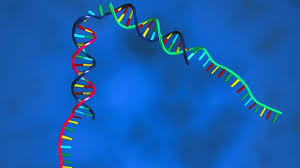
Microsoft has purchased ten million strands of synthetic DNA to advance cutting edge digital data storage technology. With the amount of digital data doubling nearly every two years, the tech industry is on a quest for a long-term solution to keep track.
The multinational tech company bought the DNA from Twist Bioscience, an announcement confirmed Thursday.
"[The] vast majority of digital data is stored on media that has a finite shelf life and periodically needs to be re-encoded. DNA is a promising storage media, as it has a known shelf life of several thousand years, offers a permanent storage and can be read for continuously decreasing costs," said Emily Leproust, CEO of Twist Bioscience, in a statement.
As the digital universe is expected to hit 44 trillion gigabytes by 2020, Twist Bioscience argues that using DNA for archival purposes solves the twin problems of limited lifespan and low data density when data is normally stored on a hard drive.
A single gram of DNA can store almost one trillion gigabytes (almost a zettabyte) of digital data. The idea of storing data in DNA was first put forward in 2012 by Harvard geneticist George Church, who encoded an entire book in DNA.
Twist Bioscience built its own machines to mass produce the synthetic DNA. Previously, they manufactured novel bits of DNA to place into microbes to perform useful chemical processes, such as producing desirable nutrients. A custom DNA sequence costs about 10 cents per base, but Twist Bioscience hopes to get that cost down to two cents.
Before the purchase, Microsoft and Twist Bioscience conducted a test phase to encode and recover 100 percent of digital data from silicon-based synthetic DNA. The data is translated into genetic code of base pairs of As, Cs, Gs and Ts that represent the chemical blocks of DNA.
"They give us the DNA sequence, we make the DNA from scratch," Leproust told IEEE Spectrum. She said they didn't know what they were coding, as they "[didn't] have the decoder key, so I have no idea what it is."