










Breaking News
 Is Big Pharma Selling Postpartum Depression to New Moms?
 Make Men Men Again: Low T Is Now a National Defense Problem
 Druski: They're Lying To You About Overnight Success!
 $6.27 Diesel Just Hit Harvest. The Grocery Aisle Hasn't Felt It Yet.
Top Tech News
 Tesla Model 3 killer charges from 10 to 97% in just 9 minutes
 World-first unpowered DNA computer sets speed record
 I Power 5 Buildings Off-Grid. Here's How
 The US government is pushing hard to get a working nuclear fission reactor into space by late 2028
 SpaceX Starmind AI in Space Radiator
 China Will Dominate Global Nuclear Energy Through 2035, Analyst Says
 These Absolutely Wild-Looking EVs Are Saudi Arabia's First Homegrown Cars
 BEYOND THE MOON: NASA plans a nuclear-powered fleet to push DEEPER into space
 Big Oil Backs Mazama's $135 Million Bet On Superhot Geothermal
 Quantum compass takes flight on Northrop's Lumberjack drone


Could we soon have superhero NIGHT VISION?...
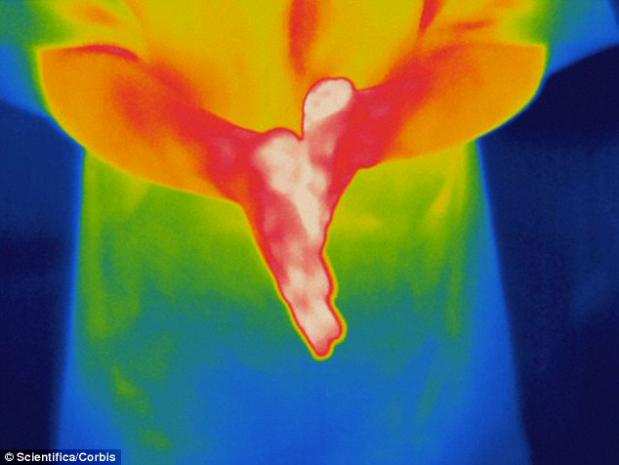
It has been put to good use by comic book superheroes and by alien predators hell-bent on wiping out mankind, but soon humans could also be able to see infrared light.
Scientists have used brain implants to give rats a 'sixth-sense' that enables them to detect and react to the normally invisible light source.
The research proves it is possible for the adult brain to adapt to new forms of input and opens up the possibility of enabling humans to gain an array of superhuman senses.
Researchers say it may be possible to attach sensors for other forms of light such as ultraviolet, microwaves and even x-rays using brain implants.
In the study, published in the Journal of Neuroscience, the scientists implanted four clusters of electrodes into a part of the brain responsible for whisker sensation in rats.
Each cluster was connected to a sensor that converted infrared light into an electrical signal.
Tests were used to show if the rats with the implants were able to detect the infrared light.
With just a single sensor, the rats took one month to adapt to the signals their brains were receiving, allowing them to detect an infrared light above a feeding station and press a button beneath it.
Those that were given four sensors, however, were able to detect the infrared light and react to the messages received by their brains in less than four days.