










Breaking News
 Is Big Pharma Selling Postpartum Depression to New Moms?
 Make Men Men Again: Low T Is Now a National Defense Problem
 Druski: They're Lying To You About Overnight Success!
 $6.27 Diesel Just Hit Harvest. The Grocery Aisle Hasn't Felt It Yet.
Top Tech News
 Tesla Model 3 killer charges from 10 to 97% in just 9 minutes
 World-first unpowered DNA computer sets speed record
 I Power 5 Buildings Off-Grid. Here's How
 The US government is pushing hard to get a working nuclear fission reactor into space by late 2028
 SpaceX Starmind AI in Space Radiator
 China Will Dominate Global Nuclear Energy Through 2035, Analyst Says
 These Absolutely Wild-Looking EVs Are Saudi Arabia's First Homegrown Cars
 BEYOND THE MOON: NASA plans a nuclear-powered fleet to push DEEPER into space
 Big Oil Backs Mazama's $135 Million Bet On Superhot Geothermal
 Quantum compass takes flight on Northrop's Lumberjack drone


How Satellites Find Shipwrecks From Space
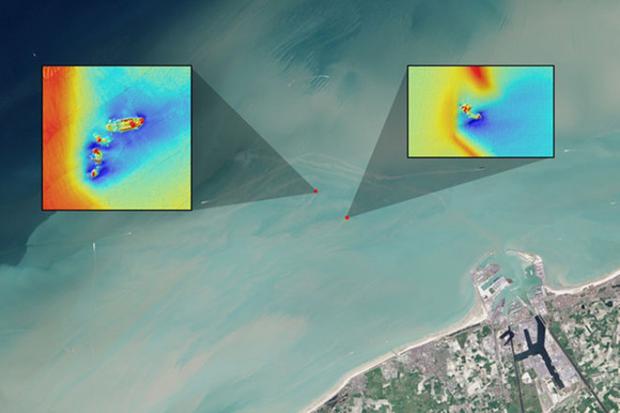
In a study published in the Journal of Archaeological Science, marine geologist Matthias Baeye at the Royal Belgian Institute of Natural Sciences and colleagues explain that wrecks produce Suspended Particulate Matter (SPM) concentration signals which can be detected by high-resolution ocean color satellite data such as NASA's Landsat-8.
Distinctive linear plumes of these particles extend as far as 2.5 miles downstream from shallow shipwreck sites and are therefore easily detectable from space.
'Landsat-8 data is free and therefore the method presented in the study is an inexpensive alternative to acoustic and laser survey techniques,' Baeye and colleagues wrote.