










Breaking News
 Is Big Pharma Selling Postpartum Depression to New Moms?
 Make Men Men Again: Low T Is Now a National Defense Problem
 Druski: They're Lying To You About Overnight Success!
 $6.27 Diesel Just Hit Harvest. The Grocery Aisle Hasn't Felt It Yet.
Top Tech News
 Tesla Model 3 killer charges from 10 to 97% in just 9 minutes
 World-first unpowered DNA computer sets speed record
 I Power 5 Buildings Off-Grid. Here's How
 The US government is pushing hard to get a working nuclear fission reactor into space by late 2028
 SpaceX Starmind AI in Space Radiator
 China Will Dominate Global Nuclear Energy Through 2035, Analyst Says
 These Absolutely Wild-Looking EVs Are Saudi Arabia's First Homegrown Cars
 BEYOND THE MOON: NASA plans a nuclear-powered fleet to push DEEPER into space
 Big Oil Backs Mazama's $135 Million Bet On Superhot Geothermal
 Quantum compass takes flight on Northrop's Lumberjack drone


Meta-skin could lead to invisibility cloak
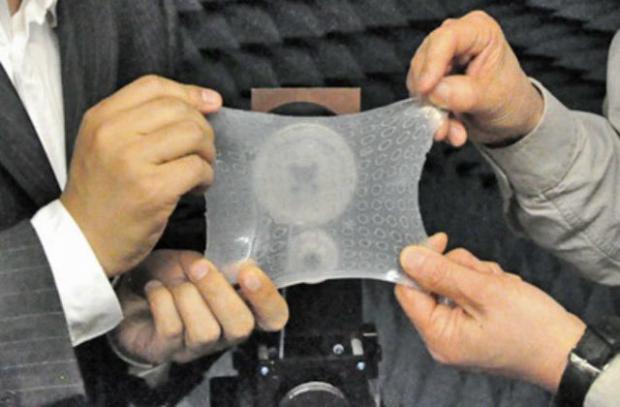
They have shown that objects wrapped in the meta-skin can suppress radar detection, and they are hoping to advance the material to eventually make objects undetectable to both visible and infrared light.
The meta-skin is so named because it is made of metamaterials (composites not found in nature) that can manipulate electromagnetic waves. The metaskin created at Iowa State is made with rows of what are referred to as electric split ring resonators that are embedded in layers of silicone sheets.
The resonaters are rings that are each about 2.5 mm (0.1 inch) in radius and about 0.5 mm (0.02 inches) thick. They are filled with a commercial metal alloy called galinstan that is liquid at room temperature and is frequently used to replace mercury due to its lower toxicity.