










Breaking News
 Is Big Pharma Selling Postpartum Depression to New Moms?
 Make Men Men Again: Low T Is Now a National Defense Problem
 Druski: They're Lying To You About Overnight Success!
 $6.27 Diesel Just Hit Harvest. The Grocery Aisle Hasn't Felt It Yet.
Top Tech News
 Tesla Model 3 killer charges from 10 to 97% in just 9 minutes
 World-first unpowered DNA computer sets speed record
 I Power 5 Buildings Off-Grid. Here's How
 The US government is pushing hard to get a working nuclear fission reactor into space by late 2028
 SpaceX Starmind AI in Space Radiator
 China Will Dominate Global Nuclear Energy Through 2035, Analyst Says
 These Absolutely Wild-Looking EVs Are Saudi Arabia's First Homegrown Cars
 BEYOND THE MOON: NASA plans a nuclear-powered fleet to push DEEPER into space
 Big Oil Backs Mazama's $135 Million Bet On Superhot Geothermal
 Quantum compass takes flight on Northrop's Lumberjack drone


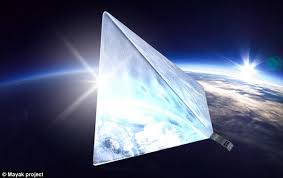
Russian Beacon satellite set to light up the night sky:
Crowdfunding target for next stage of testing has now been reached
Raised almost 1.8 million rubles (£17,365/$24,235) from 2,322 sponsors
It will be launched from a Soyuz 2 rocket with help from Roscosmos
Made of a reflective thin polymer film 20 times thinner than human hair
The brightest star in the night sky is Sirius, known as the 'dog star' or Alpha Canis Majoris.
But that could be about to change if a crowdfunded project in Russia takes off as planned later this year.
Called the 'Mayak' or 'Beacon' project, engineers are hoping to launch a satellite that will become the brightest object in our skies, apart from the sun, thanks to a giant reflective sheet of material.