










Breaking News
 Is Big Pharma Selling Postpartum Depression to New Moms?
 Make Men Men Again: Low T Is Now a National Defense Problem
 Druski: They're Lying To You About Overnight Success!
 $6.27 Diesel Just Hit Harvest. The Grocery Aisle Hasn't Felt It Yet.
Top Tech News
 Tesla Model 3 killer charges from 10 to 97% in just 9 minutes
 World-first unpowered DNA computer sets speed record
 I Power 5 Buildings Off-Grid. Here's How
 The US government is pushing hard to get a working nuclear fission reactor into space by late 2028
 SpaceX Starmind AI in Space Radiator
 China Will Dominate Global Nuclear Energy Through 2035, Analyst Says
 These Absolutely Wild-Looking EVs Are Saudi Arabia's First Homegrown Cars
 BEYOND THE MOON: NASA plans a nuclear-powered fleet to push DEEPER into space
 Big Oil Backs Mazama's $135 Million Bet On Superhot Geothermal
 Quantum compass takes flight on Northrop's Lumberjack drone


I Defend My Backyard With A Bottle Bazooka
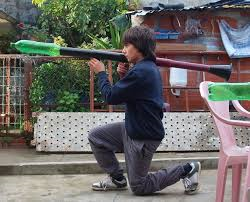
I've always wanted my own bazooka, but my neighbors might not look upon that too favorably. So instead, I satisfied my craving with a bazookalike contraption capable of launching plastic bottles clear across my backyard. While it might not be quite on the level of a U.S. Army M72 rocket launcher, my beverage-bottle bazooka sure does shoot with authority.
The original bazooka was developed to stop tanks during the early stages of World War II. In late 1940, the military had created a new type of grenade that focused its blast into a narrow point of energy capable of penetrating tank armor. But it had a relatively short range. So 2nd Lt. Edward Uhl decided to build a device to keep foot soldiers away from the tanks they were targeting.