










Breaking News
 Is Big Pharma Selling Postpartum Depression to New Moms?
 Make Men Men Again: Low T Is Now a National Defense Problem
 Druski: They're Lying To You About Overnight Success!
 $6.27 Diesel Just Hit Harvest. The Grocery Aisle Hasn't Felt It Yet.
Top Tech News
 Tesla Model 3 killer charges from 10 to 97% in just 9 minutes
 World-first unpowered DNA computer sets speed record
 I Power 5 Buildings Off-Grid. Here's How
 The US government is pushing hard to get a working nuclear fission reactor into space by late 2028
 SpaceX Starmind AI in Space Radiator
 China Will Dominate Global Nuclear Energy Through 2035, Analyst Says
 These Absolutely Wild-Looking EVs Are Saudi Arabia's First Homegrown Cars
 BEYOND THE MOON: NASA plans a nuclear-powered fleet to push DEEPER into space
 Big Oil Backs Mazama's $135 Million Bet On Superhot Geothermal
 Quantum compass takes flight on Northrop's Lumberjack drone


Sandcastle worms inspire strong, fast-acting underwater adhesive
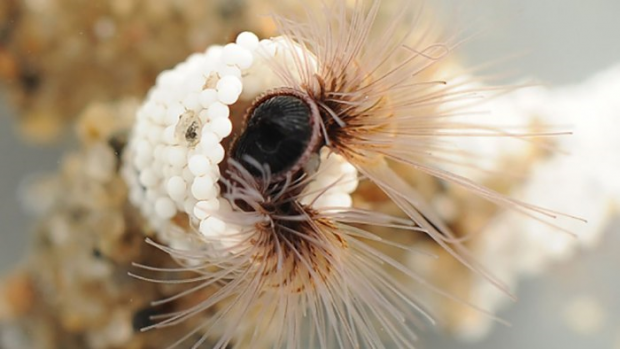
Immoveable mussels, grippy geckos and stubborn shellfish have helped nudge these efforts along in the past, and now another critter has emerged with a few sticky secrets of its own. Researchers have replicated the adhesive secreted by sandcastle worms to form a new kind of underwater glue, a substance they say could find use in a number of applications including tissue repair and dentistry.
Found along the Californian coast, sandcastle worms are reef-building marine animals so named because they construct shelter out of grains of sand that are bound together by a strong underwater adhesive. Like mussels and other glue-producing marine life, scientists have studied the creatures in hopes of developing new, robust glues that can perform in wet environments.