










Breaking News
 Is Big Pharma Selling Postpartum Depression to New Moms?
 Make Men Men Again: Low T Is Now a National Defense Problem
 Druski: They're Lying To You About Overnight Success!
 $6.27 Diesel Just Hit Harvest. The Grocery Aisle Hasn't Felt It Yet.
Top Tech News
 Tesla Model 3 killer charges from 10 to 97% in just 9 minutes
 World-first unpowered DNA computer sets speed record
 I Power 5 Buildings Off-Grid. Here's How
 The US government is pushing hard to get a working nuclear fission reactor into space by late 2028
 SpaceX Starmind AI in Space Radiator
 China Will Dominate Global Nuclear Energy Through 2035, Analyst Says
 These Absolutely Wild-Looking EVs Are Saudi Arabia's First Homegrown Cars
 BEYOND THE MOON: NASA plans a nuclear-powered fleet to push DEEPER into space
 Big Oil Backs Mazama's $135 Million Bet On Superhot Geothermal
 Quantum compass takes flight on Northrop's Lumberjack drone


In a Huge Breakthrough, Google's AI Beats a Top Player at the Game of Go
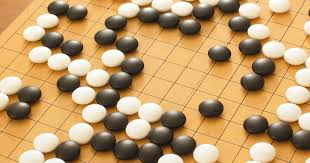
Machines have topped the best humans at most games held up as measures of human intellect, including chess, Scrabble, Othello, even Jeopardy!. But with Go—a 2,500-year-old game that's exponentially more complex than chess—human grandmasters have maintained an edge over even the most agile computing systems. Earlier this month, top AI experts outside of Google questioned whether a breakthrough could occur anytime soon, and as recently as last year, many believed another decade would pass before a machine could beat the top humans.
But Google has done just that. "It happened faster than I thought," says Rémi Coulom, the French researcher behind what was previously the world's top artificially intelligent Go player.
Researchers at DeepMind—a self-professed "Apollo program for AI" that Google acquired in 2014—staged this machine-versus-man contest in October, at the company's offices in London. The DeepMind system, dubbed AlphaGo, matched its artificial wits against Fan Hui, Europe's reigning Go champion, and the AI system went undefeated in five games witnessed by an editor from the journal Nature and an arbiter representing the British Go Federation. "It was one of the most exciting moments in my career, both as a researcher and as an editor," the Nature editor, Dr. Tanguy Chouard, said during a conference call with reporters on Tuesday.