










Breaking News
 Is Big Pharma Selling Postpartum Depression to New Moms?
 Make Men Men Again: Low T Is Now a National Defense Problem
 Druski: They're Lying To You About Overnight Success!
 $6.27 Diesel Just Hit Harvest. The Grocery Aisle Hasn't Felt It Yet.
Top Tech News
 Tesla Model 3 killer charges from 10 to 97% in just 9 minutes
 World-first unpowered DNA computer sets speed record
 I Power 5 Buildings Off-Grid. Here's How
 The US government is pushing hard to get a working nuclear fission reactor into space by late 2028
 SpaceX Starmind AI in Space Radiator
 China Will Dominate Global Nuclear Energy Through 2035, Analyst Says
 These Absolutely Wild-Looking EVs Are Saudi Arabia's First Homegrown Cars
 BEYOND THE MOON: NASA plans a nuclear-powered fleet to push DEEPER into space
 Big Oil Backs Mazama's $135 Million Bet On Superhot Geothermal
 Quantum compass takes flight on Northrop's Lumberjack drone


Micro laser sintering technology to 3D print tiny metal parts
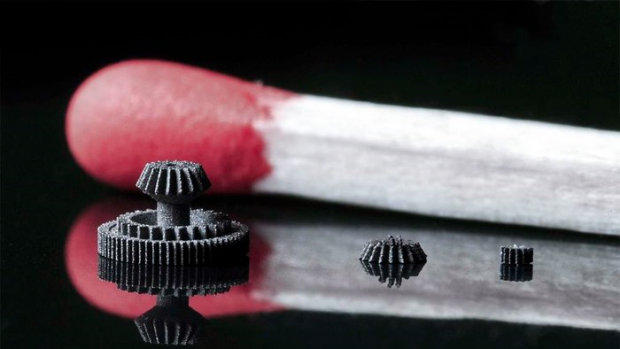
The new enterprise is developing a new micro laser sintering technology (MLS) for 3D printing tiny metal components to meet the demands of Makers and professionals alike.
Creating small, yet precise, 3D prints isn't new, researchers at the Vienna University of Technology have even done so on the nanoscale, but those components are made of resin. 3D MicroPrint's MLS technology boasts layer thicknesses of under five micrometers with metal materials, but Mandy Gebhardt at 3D-Micromac explains, "We have been processing different layer thicknesses in more than 100 projects with customers from around the globe and many industries. The thinnest layers we have used to build parts are 2 micrometers."