










Breaking News
 'UNFAIR': Mamdani's city-run grocer plan SLAPPED with lawsuit
 Trump Says If Iran Had a Nuclear Weapon, He Would Have Politely Called the Supreme Leader...
 Tucker Carlson: We are on the brink of a world war that ends with the use of nuclear weapons
 Who is trying to destroy the United States and the world?
Top Tech News
 NASA Super Light Solar Sail Project Will Be 12-40 Times Lighter and Faster
 Space Telescope Interferometer to Image Exoplanet Continents
 Twenty-five years of "temporary": how 9/11 built a surveillance state Americans never vote
 I'll Never Buy Another WALMART Battery!
 Shoei GT-Air 3 Smart helmet drops with built-in AR for $1,500
 Freezable titanium plate keeps your cooler chilled way longer than ice packs
 Review: Affordable thermal device is made for discovering life outdoors
 AI Whistleblower Tells Tucker How AI Could Kill All Humans by 2040
 You Hate Flock? Well There's More...
 Will Spiking Diesel Prices Drive Autonomous Trucking?



8 forward-thinking vehicles to propel us into 2016
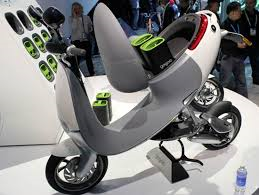
Some are certainly more practical than others, but from personal tricopters to amphibious motorcycles this new breed of personal mobility solutions offers a tantalizing glimpse into how we might be getting from A to B in the future. As we head into a new year with new possibilities, let's take a look at some that could have a role to play in shaping the future of transport.
Imagine an aluminum pad not much larger than your laptop that can be easily lugged around in your bag, and then when you encounter a stretch of smooth concrete you can whip it out and be zipped along at up to 10 km/h (6.2 mph). Granted that's not a great deal faster than walking speed, but with a built-in battery, small footprint and four tiny wheels, the ultra-portable WalkCar from Japan's Cocoa Motors shows what might be achieved with a less-is-more approach.