










Breaking News
 EXCERPTS: Citigroup Inc. received approval to launch a wholly-owned securities business...
 The Crown Wants It Kept Secret: AG Asks the Federal Court to Seal Information...
 The Supreme Court Just Denied Your Constitutional Rights
 The state is trying to crush the Amish with ruinous penalties.
Top Tech News
 Modular phone promises total privacy at the flick of a switch
 Genetically Engineered War Dogs for 134 Pound Cyborg Dire Wolves Now – Later 600 Pound Wolves
 They're Quietly REPLACING Our Food With THIS… And Nobody Is Talking About It!
 Chicago Opens First "Teacher-Free" AI School as Global Push Accelerates
 Solar Panels Are Doing Something Nobody Expected
 DeLorean climbs skyward to race electric flying cars
 Atari's 800XL returns with a keyboard, cartridges and BASIC
 Bioinspired robot airdrops into remote waters via morphing wing-sail
 Anduril interceptor adapts to emerging threats via swappable stages
 I Built a Website to Expose Solar and Battery Scams


A Portable and Easily Constructed Manual Water Pump Part 1, by G.G.
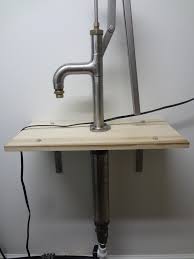
Finding water becomes the major problem faced by people in a survival situation. Go without water only a few days and death ensues. Storing water in the form of barrels is a logistical nightmare. They must be drained and refilled annually. Further, you only have as much water as you have stored.
Living in Idaho gives those of us who live here access to one of the world's largest aquifers. In fact, that body of water lies only 70 feet below my house. The problem I have is getting through the layers of hard pan, lava, gravel, and dirt that lie in between. Yes, I do have a well, but when TEOTWAWKI comes, there will be no electricity to bring that water to the surface. I guess you could say I am lucky water is only 70 feet down for me. Others in the Treasure Valley have to go down 400 feet or more to reach potable water. In order to access this water source, a portable, easily constructed manual pump is needed. (What follows is a mildly technical description of the principles employed by this pump. If this does not interest you, skip down to the assembly of the pump).
Technical Description of Manual Pump
Typical hand pumps can only pump water up from about 33 feet (14.7 psi or 1 atmosphere). Pumping water further than that pulls the dissolved air out of the water and creates bubbles. An example of this can be seen when a nurse draws medication out of a vial. Air always ends up in the syringe even though the needle remains submerged in the solution in the vial. This is due to the negative pressure being applied by the syringe. Where the air in the solution is dissolved at a higher pressure than what exists inside the syringe a natural gradient causes the dissolved gases to boil out. (This is also similar to what happens when a can of soda foams up. If the pressure outside of the open can was higher than the pressure with which the gas was dissolved in the soda, no fizzing would occur.)
So, the problem remains; how do we access water deeper than 33 feet? As I have thought about this, I kept thinking that electric pumps usually push water up from the bottom of the well, since most pumps are located at the bottom of the well, rather than pull the water up (unless special pump considerations are made). Furthermore, it is easy to conclude that a pump down at 400 feet needs to generate more pressure to push the water out than a pump at 70 feet does.