










Breaking News
 No Thank You
 4 Foods That Are ALWAYS Worth Freeze Drying
 OHIO FARM FACES SHUTDOWN - So why was J.D. Vance there?!
 If You Own Gold or Silver, STOP Scrolling--This Is Happening FASTER THAN EXPECTED | Peter Schiff
Top Tech News
 Meet the Frankenhamster: Scientists create bizarre 'planimal' by fusing together hamster and
 Roof-mounted solar panels turn your EV into its own charging station
 Russia 'is preparing to launch nuclear-armed space weapon by the end of this year'...
 Underground empire: China's plan to weaponize infrastructure gear
 $21,500 pickup plans to fix the American truck problem
 Seven Down, Three To Go: America's Microreactors Keep Going Critical
 Smart Dust
 Artificial Intelligence Could Transform Bank Runs From Hours-Long Crises...
 We Can't Put AI Back in the Box… So We Must Make It Serve Pro-Human Interests
 Dubai Just Finished the World's First Permanent Air Taxi Route: Airport to the Marina in Under 1



Slate Ain't a' Goin' No Damned Where

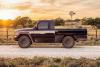
That's essentially what's going to happen to people who buy the Slate electric truck, which "estimates" claim will have a fully charged driving range of 205 miles. Since the truck isn't actually available yet, those "estimates" might be optimistic. Even if they are accurate, the Slate truck's fully charged driving would be akin to the driving range of a Ford Maverick hybrid with its tank about two-thirds empty.
The Maverick hybrid carries 14 gallons and that's fuel enough to keep it rolling for about 580 miles in "city" driving and about 480 miles on the highway. Put another way, about 4 gallons of gas is sufficient to give a Maverick hybrid about the same driving range as the "estimated" range of the not-yet-available Slate – which Slate says will be priced at about $25 to start. That would make it about $3,200 less to buy than a Maverick hybrid, which lists for $28,145 to start.
Such a deal!
Well, it kind of is as regards the Maverick – which is a practical little hybrid with truck-ish features, most notably its truck-ish bed. It isn't actually a truck – if "truck" is defined as a vehicle with more than just a bed. Trucks are commonly understood to be vehicles that are more ruggedly built than cars (and crossovers), typically with ladder-style frames onto which a body (and bed) are bolted, with the engine installed front-to-back rather than side-to-side and primarily driving the rear wheels. There is typically a driver-selectable (sometimes, automatic) four-wheel-drive system available and sometimes standard; this is not the same as all-wheel-drive – which is a feature the Maverick (and many other crossovers) offer. Both turn all four wheels when engaged, but 4WD usually routes all of the power to the rear rather than the front wheels and there is also usually a two-speed transfer case and 4WD Low range (some AWD crossovers imitate this function via a gear-reduction feature but it's not quite the same thing; the chief difference being it's not as heavy duty and not designed for the hard-slogging trucks are expected to be able to handle).
Anyhow, while the Maverick hybrid isn't exactly a truck, it's useful as a "truck" in the everyday way many people use trucks. You can fill the bed with groceries, mulch, a couple of dirt bikes or a wet dog. It is better in the snow (on paved roads) than most cars and crossovers because it sits a little bit higher off the ground (clearance is as important as having AWD – or 4WD – if you want to avoid getting stuck in the snow).
The big thing, though, is that you can use it.
The Slate not so much. Literally. If the "estimates" are accurate, the short-leash driving range limits the usefulness of this vehicle in a way that's similar to the limit imposed by the 25 MPH maximum speed that limits the usefulness of the Scion (Toyota) KEI-001 in that what's the use of a vehicle that can't realistically be driven on most roads – or very far on them? The Slate can go faster than 25 MPH but the faster it goes, the faster its range goes. This is true of all EVs, which lose range (charge ) faster the faster they are driven.