










Breaking News
 The Simpsons November Blackout Prediction
 Decentralize to Survive: Why Resilience Beats Efficiency in a Collapsing System
 Decentralize.TV - Episode 176 – Nov 16, 2026 - Razi Berry: Grow Your Own Medicine and Make Herbal.
 The End of the Nation State and the Transition to Techno-Hegemony
Top Tech News
 SpaceX Just Caught Starship on Its FIRST Attempt!
 Solid-State Cells Can Make The U.S. Competitive In Batteries Again: CEO
 Jetson ONE personal eVTOL pod is about to go full sky patrol
 America's INSANE BREAKTHROUGH Could Replace Septic Tanks Forever
 Amazing DIY Building Material for Home & Yard - Inexpensive and Easy!
 Researchers have discovered a massive deposit of hidden water...
 Amazon's Ring Unveils Flying Drone And Robot To Patrol Homes And Businesses
 Anthropic Strikes $3.4 Billion Off-Grid Power Agreement to Bypass U.S. Grids, Reports Say
 The X-ray room just shrank to the size of a laptop
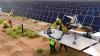 Gritt and MasTec partner to bring physical AI to solar construction sites



Decentralize to Survive: Why Resilience Beats Efficiency in a Collapsing System

I believe we are entering an era where complex centralized systems fail faster than the institutions running them can understand, diagnose, or repair. The outages we keep seeing in aviation, payroll, medicine, and finance are not random anomalies. They are previews -- early tremors of cascading failures that will grow more frequent and more severe as the systems themselves grow more entangled.
I've warned about the vulnerabilities of complex systems for years. In April of this year, I wrote that the world was unraveling in real time before our eyes, driven by fragile supply chains and single-point-dependent systems that no institution fully comprehends. [1] I believe that assessment has only become more urgent. My thesis here is simple: decentralization is not a hobby, a buzzword, or a political slogan. It is the single best protection an individual family can build against systems collapse -- and it is the difference between being a victim of the next failure and being a survivor of it.
Complexity Is Easy; Understanding Is Hard
Building complexity is easy. You simply add nodes -- another agency, another router, another department, another cloud provider, another dependency. What is hard is understanding the emergent interactions those nodes create. As the authors of The Age of Decentralization observe, network behavior can produce emergent properties not apparent when examining individual components; these are characteristics that arise from collective interactions and are not predetermined by any single element. [2] That is precisely why cascading failures are so often a surprise to the very institutions that built the systems in question.
We have watched this play out repeatedly. A faulty CrowdStrike Falcon security update caused millions of Windows systems worldwide to crash into a Blue Screen of Death loop, paralyzing hospitals, airlines, banks, and supply chains -- the largest IT outage in history -- because CrowdStrike bypassed standard rollout protocols and pushed the update globally. [3] Centralized architecture makes that kind of blast radius possible. A decentralized security operation, by contrast, consists of a distributed workforce, including security managers and asset protection managers, whose functions and authority are spread out rather than concentrated at a single choke point. [4]
Governments and large corporations have built systems they cannot comprehend, yet we depend on those systems to survive. I am not describing incompetence alone. I am describing a structural condition: the more centralized the system, the less any single human being -- or any single institution -- can actually grasp what is happening inside it. When failure comes, nobody can explain it, and nobody can fix it fast enough.
Centralized Systems Are Efficient Until They Aren't
Centralized systems look efficient from the top down. They concentrate resources, standardize processes, and produce tidy cost curves. But they also concentrate risk. One switch, one server, one payment processor, or one air traffic control system can ground flights and freeze payrolls across an entire nation. The grid prioritizes efficiency over resilience, which makes it vulnerable to cascading failures from cyberattacks, electromagnetic pulses, or sabotage that could collapse water, food, healthcare, and communication systems. [5] Decentralized systems, on the other hand, reduce reliance on any single entity for operations, minimizing the risks associated with single-point failures and vendor dependency. [6]