










Breaking News
 Bye Bye United States
 To Those Who Say Sub-$15k New Cars are Impossible
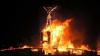 Burning Man: The Religion of Silicon Valley
 They Want To Use AI To Re-Centralize Control Of Information
Top Tech News
 Researchers have discovered a massive deposit of hidden water...
 Amazon's Ring Unveils Flying Drone And Robot To Patrol Homes And Businesses
 Anthropic Strikes $3.4 Billion Off-Grid Power Agreement to Bypass U.S. Grids, Reports Say
 The X-ray room just shrank to the size of a laptop
 Dead Simple Apocalypse Power: Build It in an Hour
 Gritt and MasTec partner to bring physical AI to solar construction sites
 Baby it's cold INSIDE! Scientists create the coldest temperature ever recorded in the lab...
 I am IN LOVE with AIRCRETE! Off-Grid, Earth-Covered Dome
 Musk's Starlink Is Building An Orbital Bypass As Undersea Cable Sabotage Threats Mount
 A robot just built a structure in space for the first time


Burning Man: The Religion of Silicon Valley
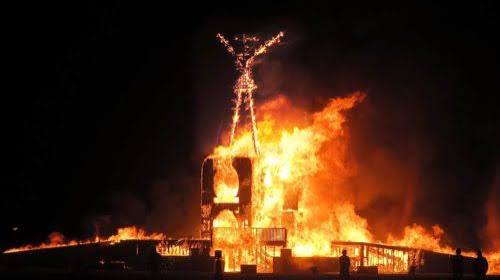
Each year, one week at the end of August, some 70,000 people raise a city on the Black Rock Desert. They burn a towering wooden effigy of a man. The next night they burn a temple. Then they go home.
Among them are the people who built the search engines, the social networks, and the artificial intelligence now reorganizing human life.
Two men have studied this gathering with unusual seriousness. They could hardly be more different.
The first is Fred Turner, a Stanford University professor of communication and one of the leading historians of Silicon Valley's culture. Turner is a secular academic. He wrote From Counterculture to Cyberculture, and in 2009 he published a peer-reviewed study titled "Burning Man at Google" in the journal New Media & Society.
The second is Carl Teichrib, a Canadian Christian researcher and author of Game of Gods: The Temple of Man in the Age of Re-Enchantment. Teichrib has attended Burning Man repeatedly since 2017 to study it. He camps there with a small evangelical team under the banner Camp of the Unknown God, a name taken from Paul's address to the Athenians in Acts 17.
One man works from sociology. The other works from Scripture. They share no worldview, no vocabulary, and no audience. Yet they arrive at remarkably similar places.
Turner explains how Burning Man functions as a religion for the technology industry. Teichrib explains what that religion actually believes.
Put them together and you get a picture that should concern anyone trying to understand where Big Tech, and the AI revolution it is driving, is taking the rest of us.
The Desert Annex
Burning Man began in 1986, when a small group led by Larry Harvey burned an eight-foot wooden figure on San Francisco's Baker Beach. Fewer than two dozen people watched. By the turn of the millennium, the crowd had passed 25,000, and since 2015 paid attendance has been capped at 70,000. More than 100 regional "Burns" now operate around the world.
The technology industry was there almost from the start.