










Breaking News
 Brace Yourselves: Serious Trouble Brewing In The Data Center Industry
 Modular phone promises total privacy at the flick of a switch
 THE O'LEARY PLAN TO TAKE THOUSANDS OF ACRES FOR WATER RIGHTS.
 It's Starting: The Fall of Europe
Top Tech News
 Genetically Engineered War Dogs for 134 Pound Cyborg Dire Wolves Now – Later 600 Pound Wolves
 They're Quietly REPLACING Our Food With THIS… And Nobody Is Talking About It!
 Chicago Opens First "Teacher-Free" AI School as Global Push Accelerates
 Solar Panels Are Doing Something Nobody Expected
 DeLorean climbs skyward to race electric flying cars
 Atari's 800XL returns with a keyboard, cartridges and BASIC
 Bioinspired robot airdrops into remote waters via morphing wing-sail
 Anduril interceptor adapts to emerging threats via swappable stages
 I Built a Website to Expose Solar and Battery Scams
 Whistleblower Issues Dire Warning: Rogue AI, Hacking Nuclear Programs...



US Designates Helium A Critical Material In Reindustrialization Push To Avoid...
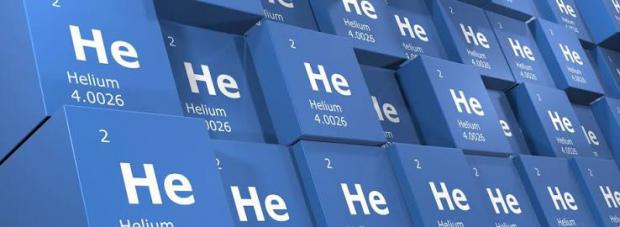
America's reindustrialization depends on securing reliable, conflict-free supplies of critical materials, including rare earths and other critical metals, most of which are produced and processed overseas.
The Trump administration has made rebuilding and strengthening domestic critical material supply chains a national security priority. Its designation of helium as a critical material on Friday morning extends that effort to now include the industrial gas used for semiconductor manufacturing and many other applications.
The Energy Department's decision earlier today makes the 20th critical material designated by the agency and brings the industrial gas within the Energy Act of 2020's critical materials framework, including closer government monitoring.
Energy Secretary Chris Wright wrote in a statement, "President Trump is bringing back America's manufacturing industry, and that means making sure we have the materials needed to build things in America again."
Wright continued, "Helium is essential to producing the semiconductors and advanced technologies that power our economy. By designating helium as a critical material, we are taking another step toward securing our supply chains, creating American jobs, and ensuring the United States leads the world in energy and technological innovation."
Helium is recovered as a byproduct of natural gas processing and faces growing geopolitical risks in the Gulf area. Qatar's exports have been severely curtailed by Iran's closure of the Strait of Hormuz and attacks on Qatari infrastructure, while Russia imposed temporary export controls in April.
The good news is that the US remains one of the top helium producers in the world, supplying 81 million cubic meters in 2025, or about 43% of global output. It exported 38 million cubic meters that year.
Helium is critical to applications ranging from chipmaking to medical imaging to quantum computing to magnets to space rockets.
Assistant Energy Secretary Audrey Robertson warned that shortages could become a "single point of failure" for strategically important industries. The Canadian Press quoted her in an interview.
"We need to make sure that we can build those here. And helium is one of those components that could be a single point of failure, where we cannot let that happen. That's why we're designating it within our statutory authority, but I think why it's important is not necessarily for our birthday parties," Robertson said in an interview. "It's really towards the future of American competitiveness and energy security, which we believe is national security."