










Breaking News
 This is the future we shall bring into being
 Elon Musk's Vision For The Future Looks Like A Movie
 Phosphorus Munitions Fired by Israel Burn Groves, Orchards in Southern Lebanon
 Iran's IRGC Warns It Will Expand 'Geography of the War' If the US Attacks Again
Top Tech News
 BEYOND THE MOON: NASA plans a nuclear-powered fleet to push DEEPER into space
 Big Oil Backs Mazama's $135 Million Bet On Superhot Geothermal
 Quantum compass takes flight on Northrop's Lumberjack drone
 Terrifying AI Behavior Even Its Creators Couldn't Explain
 WW3 Near-Miss? AI Hallucinated Nuclear Weapons Components Aboard Chinese Vessel Bound For Iran
 Stripe Is Building the Toll Road for the Machine Economy
 Toyota Dakar hopeful swaps twin-turbo V6 for hydrogen fuel cells
 4-min turbo-inflatable cubic camp castle is now available in the USA
 Researchers Used Claude To Hack OpenAI Employee Accounts
 Chinese Scientists Develop New Oil Refining Method That Cuts Energy Use by 90%



Redrawing the Map of the Middle East?
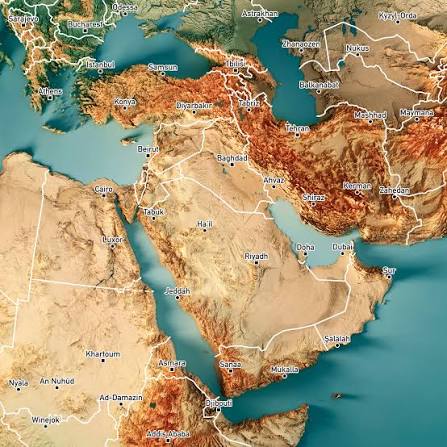
But all that changed when their lightning military advance earlier this month suddenly reached the international media headlines, drastically reshaping global oil markets.
Sweeping down the Red Sea coast, the Houthis easily routed the Saudi proxy forces long deployed against them, who fled in a wild panic, abandoning all their military equipment. As a result, the Houthis quickly captured a number of the local towns and several coastal islands.

Under normal circumstances military battles in Yemen would hardly attract a great deal of world attention. But the Houthi victories allowed them to completely consolidate their control of the Red Sea shipping lanes around the narrow Bab al-Mandab Strait, greatly reinforcing their declaration that they would block all Saudi shipping.
Soon after the Iranians were attacked by American and Israeli forces at the beginning of February, they had closed the Strait of Hormuz to oil traffic by American allies including the Saudis. But the latter then used a long east-west pipeline to successfully send their crude to the port of Yanbu on the Red Sea and export it from there.

Thus, for the last six months, the Saudis have been able to export 4-5 million barrels per day via the Red Sea. This has been one of the largest factors reducing the global impact of the Iranian closure of the Strait, but the Houthis have now suddenly blocked that route.