










Breaking News
 This is the future we shall bring into being
 Elon Musk's Vision For The Future Looks Like A Movie
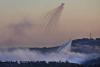 Phosphorus Munitions Fired by Israel Burn Groves, Orchards in Southern Lebanon
 Iran's IRGC Warns It Will Expand 'Geography of the War' If the US Attacks Again
Top Tech News
 BEYOND THE MOON: NASA plans a nuclear-powered fleet to push DEEPER into space
 Big Oil Backs Mazama's $135 Million Bet On Superhot Geothermal
 Quantum compass takes flight on Northrop's Lumberjack drone
 Terrifying AI Behavior Even Its Creators Couldn't Explain
 WW3 Near-Miss? AI Hallucinated Nuclear Weapons Components Aboard Chinese Vessel Bound For Iran
 Stripe Is Building the Toll Road for the Machine Economy
 Toyota Dakar hopeful swaps twin-turbo V6 for hydrogen fuel cells
 4-min turbo-inflatable cubic camp castle is now available in the USA
 Researchers Used Claude To Hack OpenAI Employee Accounts
 Chinese Scientists Develop New Oil Refining Method That Cuts Energy Use by 90%



How Human Extinction Became the Default Setting
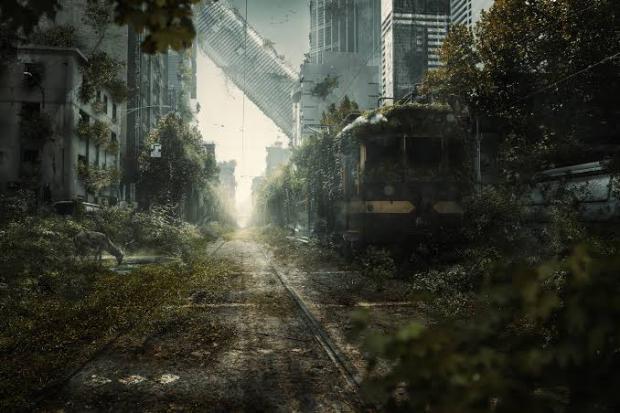
Not with explosion. With silence spreading from the coasts inward, Tuesday afternoon in late October, when the eastern grid finally collapsed under cascade failures engineers had warned about for decades. By Thursday, the western interconnect followed. Phone networks lasted forty-eight hours longer than expected, routing through emergency protocols until backup generators ran dry. Credit cards became useless plastic. Bank accounts turned theoretical. When diesel distribution failed, the trucks stopped. When the trucks stopped, the shelves emptied.
Three days. That's what American cities contained at any given moment. Three days of food, moved by just-in-time delivery that had eliminated storage as inefficient. The miracle of modern logistics became the mechanism of famine when the deliveries stopped. Refrigerated cases warmed. Frozen food thawed. Panic buying emptied shelves in hours. Then there was nothing to buy.
By month three, population had redistributed according to brutal new logic. Those with resources and foresight had already left. Those with nowhere to go remained, forming new social organizations around local assets. Those without either resources or community largely didn't survive the first winter. The cities became something else. Not dead, exactly. But no longer habitats for complex civilization.
Rural America wasn't automatic salvation, either. Mechanized agriculture had made rural regions as dependent on industrial infrastructure as cities, just differently. Diesel, fertilizer, pesticides, spare parts — all arrived through supply chains that no longer functioned. The skills to grow food without these inputs had largely vanished, replaced by expertise in operating machines that now sat silent.
Yet survival remained possible in specific places. Not random locations. Not individual bunkers. But regions where geography, climate, history, and social fabric created conditions that industrial modernity hadn't fully erased. These weren't utopias. They were hard places where hard people continued hard lives. But they continued them alive.
Understanding where requires understanding what actually matters when the complex systems withdraw.
Water comes first. Not presence, but reliable access without electric pumps, municipal treatment, or federal watershed management. You need water reachable by hand, by gravity, by simple mechanical means maintainable without supply chains.
Food production capacity follows. Not ordering seeds online, but having soil, climate, and knowledge producing calories without imported fertilizer, diesel tractors, or industrial agriculture infrastructure.