










Breaking News
 Fox News Suspends Its Pool Coverage of Trump, Supports CNN, MS NOW, Politico
 Hello MAGA, Trump Praises NYC Mayor Zohran Mamdani's Great Potential
 Home Is Where the Gold Is
 Why We're Being Censored on Substack, Why We're Leaving Substack, and Why YOU Should Too!
Top Tech News
 BEYOND THE MOON: NASA plans a nuclear-powered fleet to push DEEPER into space
 Big Oil Backs Mazama's $135 Million Bet On Superhot Geothermal
 Quantum compass takes flight on Northrop's Lumberjack drone
 Terrifying AI Behavior Even Its Creators Couldn't Explain
 WW3 Near-Miss? AI Hallucinated Nuclear Weapons Components Aboard Chinese Vessel Bound For Iran
 Stripe Is Building the Toll Road for the Machine Economy
 Toyota Dakar hopeful swaps twin-turbo V6 for hydrogen fuel cells
 4-min turbo-inflatable cubic camp castle is now available in the USA
 Researchers Used Claude To Hack OpenAI Employee Accounts
 Chinese Scientists Develop New Oil Refining Method That Cuts Energy Use by 90%



A World Turned Upside Down
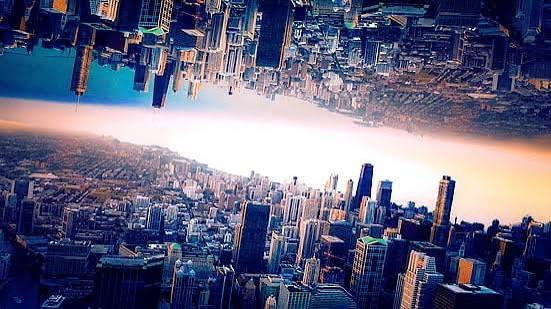
This was a meme that was in wide circulation in the Pre-WW1 years. Books were written to suggest that war could not happen: The definitive text on this concept, originally published in 1910 as The Great Illusion, became an international bestseller.
Its author, Norman Angell, argued that because nations relied heavily on a highly intertwined global trading system, the economic cost of war would drastically outweigh any potential gains. He asserted that a victorious nation would suffer just as much economic ruin as the vanquished – making the traditional concept of military conquest obsolete. His argument was popularly interpreted as making war "impossible."
His argument proved fallacious; the Great War duly erupted.
Today, the idea of some multi-polarity interplay persists, but the threat of war remains and is heightened by the West's refusal to hear – or understand – what civilisational sovereign states are saying. This inability to listen with empathetic engagement lies at the root of the catastrophic western Intelligence misreadings of Iran and Russia. And the casting of China as so "other" to make it a closed-book to western ears.
In his influential 1981 book, After Virtue, Alasdair MacIntyre argued that the Enlightenment project cut Western man off from his roots in tradition, but had failed to produce a binding morality based on Reason alone. Consequently, many of those who live in the West live a world of "moral chaos and fragmentation, in which "chaotic.=," disintegrative forces have very nearly obliterated true moral inquiry from European culture."
What is important to understand is that MacIntyre's "moral chaos and fragmentation" is deliberately fostered to weaken national, community and religious attachment – precisely in order to target and weaken national cohesion and civilisational sovereignty.
MacIntyre's argument is that it is cultural tradition alone, and its moral tales, that provide context to terms such as good, justice and telos:
"In the absence of traditions, moral debate is out of joint and becomes a theatre of illusions in which simple indignation and mere protest occupy centre stage."
"Lines are drawn early, and participants rush to take sides. But in taking sides they appear to render themselves incapable of hearing the other … Everyone feels the heat, but no one sees the light," MacIntyre underlines.
What we possess today, MacIntyre suggests, are nothing more than mere fragments of an older tradition (Heroic Society). These fragments simply are too sparse, since our moral discourse, which uses terms like good and justice and duty, has been robbed of the context that would make it intelligible. In other words, it places the virtue of the heroic, Homeric world beyond western reach.