










Breaking News
 The Tesla Cybertruck Finally Gets A Feature That Was Promised Three Years Ago
 New study links prenatal Tylenol exposure to smaller ovaries, uteruses in daughters
 Twenty-five years of "temporary": how 9/11 built a surveillance state Americans never vote
 Dangerous Cosmetics Alert: Why Stearalkonium Chloride and Synthetic Colors Are Chemtrails...
Top Tech News
 Freezable titanium plate keeps your cooler chilled way longer than ice packs
 Review: Affordable thermal device is made for discovering life outdoors
 AI Whistleblower Tells Tucker How AI Could Kill All Humans by 2040
 You Hate Flock? Well There's More...
 Will Spiking Diesel Prices Drive Autonomous Trucking?
 Chinese Concept Video Imagines the Future of Warfare
 OPTIMUS CONFIRMED: 15,000 Bots This Year -- Tesla to $3,000
 What is Going On With Robotaxi and Cybercab? Here Are All the Answers
 Floating data center would provide water and electricity to 32,000 homes
 OpenAI Cuts Off Elon's Cursor, Humanity's First Star Probe, and Trump's Nuclear Mars Shi



Dangerous Cosmetics Alert: Why Stearalkonium Chloride and Synthetic Colors Are Chemtrails...
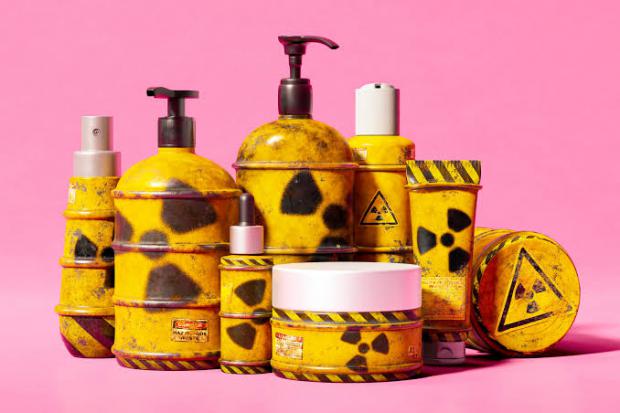
Cosmetics are often marketed as products that make hair, skin and appearance look healthier, but the ingredient lists can tell a less appealing story.
Among the chemicals that deserve closer attention are stearalkonium chloride and synthetic colors. These substances serve practical formulation purposes, yet their potential for irritation, allergic reactions and unnecessary chemical exposure raises questions for consumers seeking simpler personal-care products.
What Is Stearalkonium Chloride?
Stearalkonium chloride is a "quaternary ammonium compound", commonly called a "quat." Its INCI name is stearalkonium chloride, while its chemical name is benzyldimethyl(octadecyl)ammonium chloride.
It is also identified by CAS No. 122-19-0.
The ingredient carries a positive electrical charge that allows it to adhere to the negatively charged surface of hair. This makes it useful as an antistatic and conditioning agent, helping hair feel smoother, more manageable and easier to comb.
It is particularly common in conditioners, deep-conditioning treatments, hair masks and some styling products. Scientific literature on hair care identifies stearalkonium chloride among the quaternary conditioners used to reduce static and improve hair feel.
Stearalkonium chloride can also function as a surfactant and antimicrobial ingredient. Cosmetic ingredient databases list antistatic, preservative and surfactant functions.
Is Stearalkonium Chloride Toxic?
The picture is more complicated than simply labeling the ingredient "toxic." A Cosmetic Ingredient Review safety assessment concluded that stearalkonium chloride was safe for use in cosmetics at concentrations similar to those then marketed, and patch testing did not identify it as a significant sensitizer in the tested conditions
However, that does not mean the substance is entirely without concern. Concentration and exposure matter, and quaternary ammonium compounds can produce irritation under sufficiently concentrated conditions. The historical safety assessment also reported animal toxicity data at substantially higher exposures than those normally encountered in cosmetics.
For consumers with particularly reactive skin or a history of contact dermatitis, avoiding unnecessary quaternary ammonium ingredients may therefore be a reasonable precaution.
The broader concern is not that ordinary conditioner use has been proven to cause systemic poisoning, but that an ingredient with limited cosmetic necessity can contribute to irritation or unwanted exposure in susceptible individuals.
What Are Synthetic Colors?
Synthetic colors are manufactured dyes and pigments used to give cosmetics their distinctive shades. They may appear on labels as names such as FD&C Blue No. 1, FD&C Yellow No. 5, FD&C Red No. 40, D&C Red No. 7 or simply abbreviated color names and numbers.