










Breaking News
 Israel defense minister vows to keep troops in Syria during visit
 NASA engineer says white men did the grunt work while DEI hires got the careers… lawsuit incoming?
 AP goes full climate doomsday! 'The world inches toward catastrophic climate events':
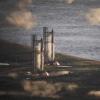 SpaceX Has 17 Starship Launch Pads Under Development
Top Tech News
 Singapore is experimenting with biological computing using living human neurons...
 It's Happening - Europe is Building an Impossible Fusion Reactor
 Portable 1MW Kaleidos Microreactor Secures Critical Nuclear Fuel Deal Through 2030s
 This New All-In-One Range Extender Is Ready To Go Into Any Electric Truck
 Aptera Reveals The Secret To Building Its Solar EV: China
 High-voltage sodium home battery emerges as affordable rooftop solar solution
 Peter Thiel-Funded Company Anduril to Triple the Number of Autonomous Surveillance...
 China has released Origin Pilot, claimed to be the world's first open-source operating system...
 ShieldAI XBAT Drone Fighters Can Give A Fighter Drone Wing to Every US Destroyer
 Brain organoids, kept alive more than five years, matured like human brains



SpaceX to build world's largest spaceport in Louisiana
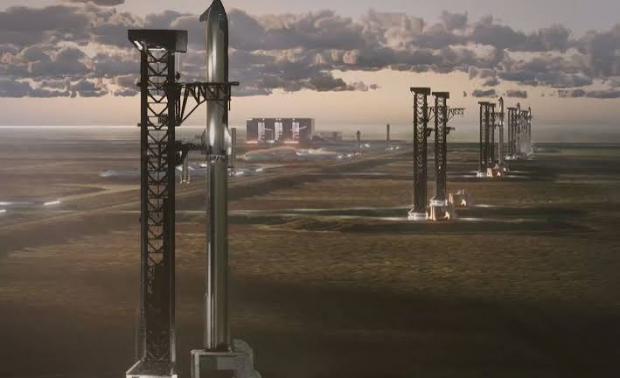
There was a time when space launches were so rare that they were televised and there were so few launch sites in the world that you could count them on one hand and still get change. Today, that's very different. It's next to impossible to keep track of all the spaceports, and the number of launches has sped up to the point where SpaceX has launched more satellites into orbit in a few years than the entire world combined in almost 70 years.
However, even that is changing as SpaceX begins work on its Louisiana Starbase, as the facility is called. Under the agreement, SpaceX will convert approximately 125,000 to 130,000 acres (~50,500 to 52,600 hectares) of coastal land near Pecan Island in Vermilion Parish, Louisiana into a fully integrated, self-sustaining industrial launch complex to scale Starship operations beyond the constraints of existing facilities.
Free of the restrictions imposed on SpaceX at Cape Canaveral and in Texas, the new facility will have 10 Starship launch pads, a vehicle processing facility, deep-water shipping ports, a dedicated airport, power generation plants, and an onsite natural gas processing plant to convert local gas into liquid methane fuel.
There's more to this than sheer size. SpaceX's Starship technology has matured to the point where its latest launch ended with the Starship making its first soft landing in the Indian Ocean. The rocket was so intact that it floated on the sea like a balloon and the company was so taken aback that they had to cobble together a salvage mission to tow the craft to Christmas Island for examination. In addition, the original estimate that the Falcon 9 reusable boosters were only good for 10 flights has been shattered by the latest mission using a booster that had flown 37 times.
What all this means is that launch technology has jumped forward so far that even today's accelerated launch rate will look like me trying to get through an airport with a large suitcase compared to what's coming next.
It's estimated that when the new Starbase becomes operational around 2029, it will give SpaceX 15 operational launchpads that will make it possible to launch over 1,000 missions per year. That may seem like a lot, but the target is to eventually reach over 10,000 launches per year and completely phase out the Falcon 9 in favor of Starship.
This means rockets capable of carrying 100 tonnes of cargo lifting off with the regularity you'd expect from a small airport. It also means mega-constellations of satellites orbiting the Earth as well as the ability to set up space labs as a matter of routine and to maintain a Moonbase in much the same way we now run Antarctic stations.