










Breaking News
 'Rogue AI Agents' Aren't Rogue, They're Fulfilling Their Functional Goal: Automating
 WATCH LIVE: LIVE: Texas Appellate Court Overturns Alex Jones/Sandy Hook Show Trial Verdict!
 The so-called "Common cents Act" isn't common sense for you. It's common sense fo
 Plastic-free vegan leather sees production-scale breakthrough
Top Tech News
 High-voltage sodium home battery emerges as affordable rooftop solar solution
 Peter Thiel-Funded Company Anduril to Triple the Number of Autonomous Surveillance...
 China has released Origin Pilot, claimed to be the world's first open-source operating system...
 ShieldAI XBAT Drone Fighters Can Give A Fighter Drone Wing to Every US Destroyer
 Brain organoids, kept alive more than five years, matured like human brains
 Parkinson's patient's tremors VANISH within minutes of GROUNDBREAKING treatment
 Polaris injects pneumatic shifting into expedition-grade side-by-side
 NEW HOMES ARE BUILT WITH THIS AND IT'S MAKING YOU SICK
 S3E33: I Beat the Attorney General. No Lawyers. My Legal Team Was AI
 World's largest all-electric plane completes maiden flight


Landmark study upends how we think the brain responds to psychedelics
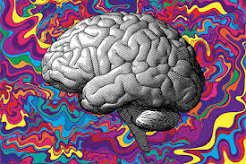
Many describe the results as profoundly life-changing. And yet despite years of research into the biochemistry of compounds such as LSD, it remains unclear how a bright new order manifests from what is essentially a breakdown in neurological harmony.
A record five-year, single-site brain-imaging study conducted by researchers from Monash University in Australia has now found evidence of psilocybin – the chemical that makes some mushrooms "magic" – reorganising brain activity into structured patterns aligned with what participants are doing and experiencing.
Like most psychedelics, psilocybin's effects are the result of interactions with a specific type of serotonin receptor in the brain, which both triggers the characteristic hallucinations and euphoria and induces neural plasticity.
This potential to deconstruct and rebuild critical networks in the brain makes psilocybin an attractive therapeutic tool in treating mental health conditions such as depression, PTSD, and anxiety.
"Psychedelics may offer a different treatment model from conventional daily medications, potentially producing meaningful psychological change after one or a small number of supported sessions," senior author and computational neuroscientist Adeel Razi told New Atlas.
"But the important question is not whether they replace existing treatments, but which patients benefit, under what conditions, and how reliably those benefits can be achieved."
Critical to psilocybin's application is the drug's complex relationship with an individual's mindset and their experience. Unlike many psychiatric prescriptions, the clinical effectiveness of psychedelics can't be divorced from the context in which they're taken.
"What makes psychedelics unusual is that the experience itself may be a substantial part of how the treatment produces lasting psychological change," first author and neuroscientist Devon Stoliker told New Atlas.
Until now, research has largely focused on time-averaged brain connectivity across groups of volunteers, making it difficult to see how order can emerge dynamically in individual brains over time in different settings.
The researchers behind this latest investigation compared EEG and functional MRI brain scans of 62 healthy adults taken before and after a dose of psilocybin, producing the largest single-site psychedelic neuroimaging dataset to date.
None of the volunteers had previously taken psychedelics, making their experience truly novel.
Shortly after participants had taken psilocybin, they had their brains scanned using fMRI, during which they closed their eyes and had five minutes of rest, followed by another five minutes of audio-guided meditation, and seven minutes listening to music. They then opened their eyes and watched a five-minute movie.