










Breaking News
 EMF Exposure -- A Major Factor in the Development of Autism
 SpaceX AI Satellites Will Have 250 Kilowatts of Power
 The Promise Of A Quick Victory Turns Into A Stagnating Conflict...
 REPORT: Pentagon Draws Up Plans for Possible Military Action Against Communist Cuba
Top Tech News
 Chinese researchers have developed a sodium-metal battery that can fully charge in just 4 minutes...
 SpaceX Starship Flight 13 in 3 Days - Thursday July 13
 Chinese Scientists Develop Nuclear Battery Using Carbon-14
 Teleoperated humanoid robots complete first-ever live surgery
 Floating capsule auto-disinfects water without chemicals or battery
 Modular Reactors To Solve Data Center Hysteria?
 DeepSeek Developing In-House AI Chip In Bid To Cut Nvidia Reliance
 America just took three brand-new nuclear reactors critical in thirty days, a first for any...
 Your brain doesn't peak in your 20s after all: Study reveals your mind is at its sharpest betwee
 Compasses, not maps: China is building a different type of AI



Can nicotine make you smarter? Why biohackers -- and conservative pundits...
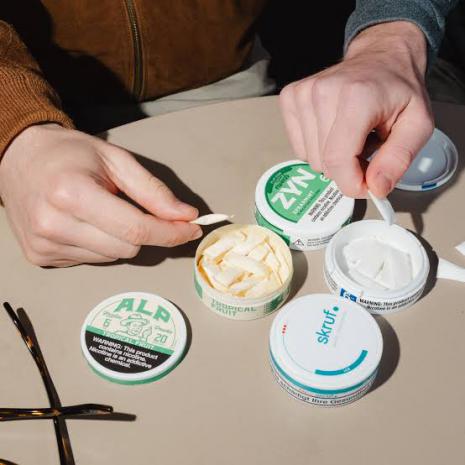
"Are you over the age of 21?" the perky representative asked as she handed me two tins of ALP nicotine pouches.
We were at Dave Asprey's Beyond Biohacking Conference, where attendees crowded around the booth to get their hands on the brand's fruity and minty "lip pillows."
Nicotine has long been viewed as a vice, not a tool for improving health and performance — but it's recently undergone an image makeover thanks to biohackers, wellness influencers and high-achieving consumers seeking a cognitive edge.
Once synonymous with cigarettes and addiction, the stimulant is now being explored as a tool for improving mental performance and brain health — with Asprey among its most vocal advocates.
"Nicotine is one of the most misunderstood compounds in the biohacking world," Asprey, who pioneered the movement, told The Post.
The problem, he said, is that when people hear nicotine, they immediately think of cigarettes.
"Tobacco smoke contains more than 7,000 chemicals and carcinogens. Vaping is probably worse," Asprey said. "Pharmaceutical-grade nicotine is completely different."
He said that nicotine, when separated from tobacco and combustion, can act as a powerful nootropic — binding to receptors in the brain involved in memory, attention and neuroprotection.
"I've been using non-combustible nicotine for years now, and I'm not shy about it," Asprey said. "I typically use a low dose, we're talking 2 to 5 milligrams, and I'm strategic about when I use it. It's usually before deep work or before a high-stakes conversation."