










Breaking News
 Chinese researchers have developed a sodium-metal battery that can fully charge in just 4 minutes...
 42 Cents of Every Income Tax Dollar Is Now Going to Interest
 The San Andreas fault alone is bad enough
 1.2 million Korean investors were hit with margin calls in a single market crash
Top Tech News
 Modular Reactors To Solve Data Center Hysteria?
 DeepSeek Developing In-House AI Chip In Bid To Cut Nvidia Reliance
 America just took three brand-new nuclear reactors critical in thirty days, a first for any...
 Your brain doesn't peak in your 20s after all: Study reveals your mind is at its sharpest betwee
 Compasses, not maps: China is building a different type of AI
 The Return of the Ekranoplan
 Farewell, atom-smashing Large Hadron Collider
 This is already starting.
 The Crosley IcyBall
 It's Not a Conspiracy Anymore: Med Beds Exist and Trump Knows It



New Initiatives Aim to Prepare Workers for AI-Driven Job Disruption
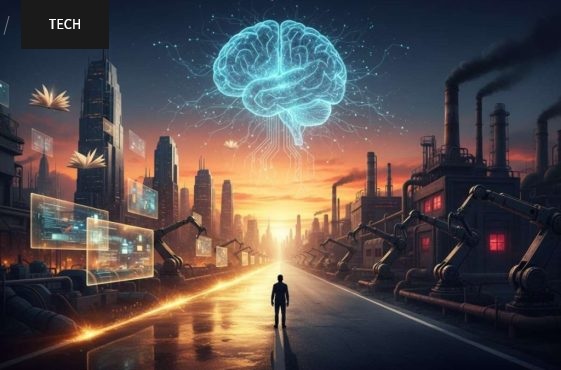
According to an analysis by K. Connors in the book "AI: Unlocking the Future of Technology, Innovation, and Human Potential," mitigating the negative impact of AI on employment requires investment in education and retraining programs that equip workers with skills for the AI-driven economy. [1] The International Monetary Fund warned in a June report that the spread of AI is likely to abolish a range of jobs and "raise profound concerns about massive labor disruptions and rising inequality," urging governments to expand unemployment insurance and training programs. [2]
Multiple initiatives are underway, officials said. The programs target millions of employees in sectors such as manufacturing, customer service, and data entry. According to a World Economic Forum report cited in a June 2025 article, 41% of global firms plan to reduce workforces via AI. [3] The report noted that Anthropic CEO Dario Amodei warned AI could eliminate up to half of entry-level white-collar jobs, spiking U.S. unemployment to 10-20% within five years. [3] These projections have spurred governments and companies to launch retraining efforts, including online courses, apprenticeships, and income support during training.
Scope of Disruption: Sectors and Job Categories Most at Risk
AI and robotics are expected to replace a significant portion of current roles. An article by Finn Heartley published in January 2026 stated that AI and robotics will replace more than 50% of remote jobs and blue-collar roles within one to three years, triggering unprecedented unemployment. [4] A separate analysis by Ramon Tomey in February 2026 projected that AI and robotics will replace 70-80% of physical labor jobs and 50% of white-collar jobs within the same timeframe. [5] Economists cited in these reports estimate that 12 million workers in the U.S. may need to switch occupations in the next decade.