










Breaking News
 The Japanese Yen is at its lowest level since 1986 against the US Dollar, losing 54% of its value...
 TINA PETERS: "JUST SAY YOU LIED." SHE REFUSED.
 JUST IN: Wells Fargo, the $2.5 TRILLION Wall Street giant, just revealed...
 Turkey's Erdo?an gives NATO leaders a handgun conundrum after summit
Top Tech News
 Modular Reactors To Solve Data Center Hysteria?
 DeepSeek Developing In-House AI Chip In Bid To Cut Nvidia Reliance
 America just took three brand-new nuclear reactors critical in thirty days, a first for any...
 Your brain doesn't peak in your 20s after all: Study reveals your mind is at its sharpest betwee
 Compasses, not maps: China is building a different type of AI
 The Return of the Ekranoplan
 Farewell, atom-smashing Large Hadron Collider
 This is already starting.
 The Crosley IcyBall
 It's Not a Conspiracy Anymore: Med Beds Exist and Trump Knows It



NASA Looking for Participants in a Year-Long Simulation To Replicate Living...
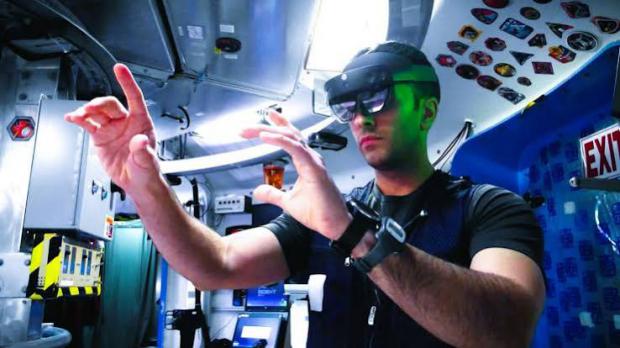
Lunar and Martian life to be experienced here on Earth.
Those who have dreamed of living on another planet now have the opportunity to participate in a year-long simulation.
To learn what life on another planet would feel like, NASA is offering a chance for the next best thing.
CNN reported:
"The US space agency is looking to recruit four participants for its Moon and Mars Exploration Analog (MMEA), a yearlong simulation program that is designed to replicate traveling and living on the Moon and Mars, it said in a press release earlier this month.
While it may not be quite the real deal, volunteers will be in spacelike conditions, living inside confined habitats and carrying out tasks just as astronauts would, such as growing crops, looking after their health and replicating spacewalks."
The program will be based at the Johnson Space Center in Houston and is expected to begin in late 2027.
"A NASA spokesperson told CNN that the research program would help reduce any risks astronauts may face when flying to space and landing on Mars.
'Volunteer research participants contribute greatly to the knowledge base by helping NASA characterize the risks and test countermeasures to enhance human performance during long duration space exploration missions', the spokesperson said."
NASA reported:
"This mission is the first in a ground-based environment that will simulate multiple parts of a Moon or Mars mission, combining elements of NASA's HERA (Human Exploration Research Analog) and the CHAPEA (Crew Health and Performance Exploration Analog) missions into a single, integrated campaign.
Crew members will use the habitat previously used for HERA at NASA Johnson as their simulated transit spacecraft, operating in a confined, isolated environment that mirrors deep?space travel. They then will shift to the surface habitat phase, where researchers will study crew performance under the resource limits and mission demands crew members could experience on another planetary surface.