










Breaking News
 The Middle East Security Map Is CHANGING FAST! Saudi Arabia, Pakistan & Turkey Move Toward...
 Report: US Troops and Diplomats Evacuating Posts Across the Middle East
 The USDA's $8 Billion Farmer Bailout Is Communism Disguised as Relief
 Sell The Bailout: Skydance Tumbles As Musk's $1 Billion Check Reminds Everyone Paramount...
Top Tech News
 Chicago Opens First "Teacher-Free" AI School as Global Push Accelerates
 Solar Panels Are Doing Something Nobody Expected
 DeLorean climbs skyward to race electric flying cars
 Atari's 800XL returns with a keyboard, cartridges and BASIC
 Bioinspired robot airdrops into remote waters via morphing wing-sail
 Anduril interceptor adapts to emerging threats via swappable stages
 I Built a Website to Expose Solar and Battery Scams
 Whistleblower Issues Dire Warning: Rogue AI, Hacking Nuclear Programs...
 Multi-material insulation delivers up to 10,000 x the stiffness
 Anduril's plan to save US sub edge from China's undersea surge



Ugandan Coffee Growers Shrug Off Drought Thanks to Regenerative Agriculture
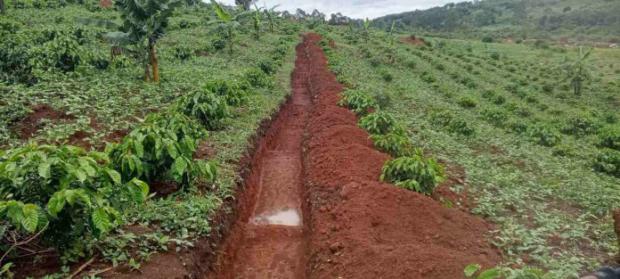
Among the rolling hills of Uganda's Masaka region, robusta coffee plants are producing larger, tastier yields thanks to a pilot program utilizing regenerative agriculture to battle droughts or erratic rainfall.
A catch-all term for a variety of growing techniques as simple as mulching to as complex as cover cropping, regenerative agriculture is especially useful in the coffee belts where nutrient-poor tropical soils and heavy rainfall make erosion a real threat to productive crops.
Coffee is central to Uganda's economy and the social fabric of life in many growing regions like Masaka. Global Environment Facility, (GEF) an international partnership focused on providing financial resources to help countries address global environmental issues, brought together a coalition of groups with the idea of setting up demonstration farms to teach the Ugandan growers in Masaka how to utilize regenerative farming.