










Breaking News
 Watch: Morano on Jesse Watters Primetime on Fox: 'Climate communists' are using fear...
 Investigation Launched After Listening Device Found in Former WEF Head Klaus Schwab's Home...
 WAR ROOM LIVE: Alex Jones Debates Sneako LIVE Right Now With Commentary From Harrison Smith...
 Trump's inner circle have shown me the real UFO disclosure:
Top Tech News
 DeepSeek Developing In-House AI Chip In Bid To Cut Nvidia Reliance
 America just took three brand-new nuclear reactors critical in thirty days, a first for any...
 Your brain doesn't peak in your 20s after all: Study reveals your mind is at its sharpest betwee
 Compasses, not maps: China is building a different type of AI
 The Return of the Ekranoplan
 Farewell, atom-smashing Large Hadron Collider
 This is already starting.
 The Crosley IcyBall
 It's Not a Conspiracy Anymore: Med Beds Exist and Trump Knows It
 A SINGLE dose of a newly discovered frog gut bacterium...


The American Revolution and the Danger of Standing Armies
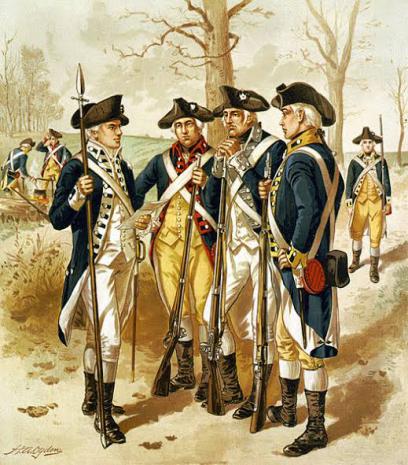
This was a heritage of British legal thought and history, and it became an underappreciated part of American political thought and experience.
Why were peacetime standing armies viewed as such a threat?
To many Americans of this period, peacetime standing armies posed a threat not only because they could be used by the state to overthrow liberty, but because they tended to reshape society and government itself. A permanent military establishment could develop interests distinct from those of the people, become an instrument for enforcing unpopular or unconstitutional policies, and concentrate power in the hands of central authorities.
Standing armies also required permanent taxation, debt, and bureaucracy, fostering what later historians would call a fiscal-military state. This process also creates vested interests. Once careers, contracts, pensions, and bureaucracies depend upon military expenditures, peace may no longer seem desirable by many. James Madison said,
Of all the enemies of true liberty, war is, perhaps, the most to be dreaded, because it comprises and develops the germ of every other.
War is the parent of armies; from these proceed debts and taxes; and armies, and debts, and taxes are the known instruments for bringing the many under the domination of the few. . . .
No nation can preserve its freedom in the midst of continual warfare.
Moreover, standing armies threatened to erode the ideal of the citizen-soldier by replacing local militias defending their homes with professional soldiers whose loyalty was directed primarily toward the state (which paid them). In the minds of many revolutionaries, standing armies and expanding government power were mutually reinforcing, with war and military necessity often serving as the justification for greater centralization and political control.
It is the contention of this article that the Continental Congress's decision to appoint George Washington commander of the Continental Army and to pursue his state-centric military strategy, together with the extraordinary fiscal and political measures adopted to sustain that strategy—including inflationary finance, public debt, legal tender laws, price controls, confiscation, and other wartime expedients—demonstrated the close relationship between war, standing armies, and the centralization of political power. We can observe a recurring historical pattern: war strengthens standing armies, standing armies require expanded state capacity, and expanded state capacity tends toward political centralization.
British-American Opposition to Standing Armies
Opposition to permanent, peacetime standing armies is a noble British-American tradition, largely based on historical experience, not just abstract political philosophy.