










Breaking News
 The Great Rotation Has Begun... Here's How to Make Your Money Back
 Blue Origin plans to fly New Glenn rocket again this year despite massive rocket explosion
 Through Technology, a Centuries-Old Battle Is Coming to a Head
 Chinese cars go blacker than black via hybrid nano tech
Top Tech News
 'Groundbreaking' Potential Lupus Cure Sends Patients into Remission, Allowing Dreams...
 Speculations on What Could Show Physics Beyond the Standard Model
 SpaceX Orbital Travel and Orbital Hotels Need Starfall – Getting Back Safe and Cheap is Exciting
 Lizard-inspired wiggly wheels let Mars rover swim through sand
 Fact Sheet: President Donald J. Trump Ushers in the Next Frontier of Quantum Innovation
 Researchers at Johns Hopkins University just let an AI-guided robot remove a dead pig's gallblad
 World's first consumer wing-in-ground effect aircraft takes flight
 America's Military Readiness Depends On Deployable Nuclear Power
 License Plate Cameras Are About To Start Tracking A Lot More Than Just Your Car
 Heads up: Apparently the government is hiding cameras inside fake utility boxes



The Quiet Operational Architecture Behind U.S.-Israel Integration
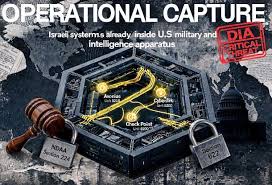
She correctly identifies how NSPM-12, several legislative vehicles, and Pax Silica are being used together to create pathways for greater integration. Her framing is useful and timely.
What GenXGirl's piece does not fully develop is the operational layer already in motion beneath those policy instruments. The reporting maps the intent. This article today is the part that moves the story from mapping the policy architecture to showing the operational layer already in motion. It shows how access is already moving through procurement channels, certifications, and existing legal authorities, and how new legislation is being used to make that access harder to reverse.
The evidence does not point to a future architecture waiting to be assembled, but to systems already operating within U.S. federal networks that are now being legally fortified. We can demonstrate that the implementation proof exists and can be mapped.
The legal root was already there
The current debate often begins at the wrong point. It treats the new bills and memoranda as the starting gun, even though the legal foundation predates them by decades. The 1982 General Security of Information Agreement (GSOIA) — effected by exchange of notes in Tel Aviv on July 30 and Jerusalem on December 10, 1982, with an Industrial Security Annex dated March 3, 1983 — already created the bilateral framework for classified exchange between the United States and Israel, including controlled information sharing involving cleared contractors and project agreements. That is not a theory. The old legal spine of the relationship needs to be described in detail if one is to understand what is being implemented today.
Under the GSOIA framework, Project Agreements can be concluded by designated Executive Agents on each side. On the U.S. side, through the relevant Military Department or Defense Agency, and on the Israeli side, through the Director of International Programs and Cooperation at the Directorate of Defense Research and Development (DDR&D / MAFAT). This means Israeli entities do not require new legislation to receive classified material under a co-production arrangement. They need only a valid Project Agreement under the existing GSOIA. The five bills and NSPM-12 do not create this pathway. They supercharge it.
Our analysis shows that the new legislation is not inventing access from scratch. Instead, it is widening, modernizing, and hardening a channel that already exists. Therefore, the practical question is not whether the United States and Israel can share classified material. They already can. The question is how much further that exchange is being normalized, how many systems are already inside the orbit, and how much discretion is being removed from future reversals.