










Breaking News
 Can Two Hours Of School Really Be Enough? | MacKenzie Price #491 | The Way I Heard It
 Tucker Carlson: "This World Is Not Run By Humans!" Trump Has Supernatural Powers
 How They're Building an Off-Grid Community in the Private Realm (Trust + PMA + Ministry)
 Some New V8s!
Top Tech News
 'Groundbreaking' Potential Lupus Cure Sends Patients into Remission, Allowing Dreams...
 Speculations on What Could Show Physics Beyond the Standard Model
 SpaceX Orbital Travel and Orbital Hotels Need Starfall – Getting Back Safe and Cheap is Exciting
 Lizard-inspired wiggly wheels let Mars rover swim through sand
 Fact Sheet: President Donald J. Trump Ushers in the Next Frontier of Quantum Innovation
 Researchers at Johns Hopkins University just let an AI-guided robot remove a dead pig's gallblad
 World's first consumer wing-in-ground effect aircraft takes flight
 America's Military Readiness Depends On Deployable Nuclear Power
 License Plate Cameras Are About To Start Tracking A Lot More Than Just Your Car
 Heads up: Apparently the government is hiding cameras inside fake utility boxes



Americans Are Spending More, but Their Savings Are Quietly Disappearing
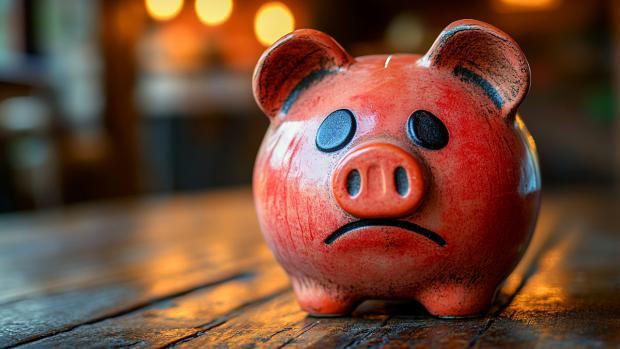
The Bureau of Economic Analysis (BEA) released its report Friday showing personal income climbed 0.7 percent last month, adding $181.6 billion, with disposable income rising by that same margin. Americans didn't sit on that extra cash, with personal consumption expenditures (PCE) surging $156.1 billion, also up 0.7 percent. But once you strip out inflation, real spending only gained 0.3 percent (a reminder that rising prices are quietly chipping away at purchasing power even as the headline numbers look strong).
Inflation isn't going away quietly. The PCE price index rose 0.4 percent from April and sits 4.1 percent above where it was a year ago. Strip out food and energy and the core reading comes in at 3.4 percent. Both figures are well above the Federal Reserve's 2 percent target, and notably, they've accelerated for two consecutive months now. Worth mentioning: the BEA also revised historical numbers related to legal services inflation (a quiet tweak that can shift the narrative even though it changes nothing about what people actually feel paying for groceries). With the central bank locked into a "data-dependent" approach, a print like this makes any near-term rate cut conversation significantly harder.
Meanwhile, households are keeping up their spending, just not from a position of strength. Total personal outlays, which includes interest and transfer payments, climbed nearly $160 billion. But savings landed at only $704.2 billion, putting the personal saving rate at 3.0 percent of disposable income. That's hovering near the lows recorded before the 2008 financial crisis, and history shows that thin savings buffers leave families exposed when credit conditions tighten. On the spending breakdown, goods purchases rose $61.8 billion while services added $94.3 billion, continuing the familiar post-pandemic shift toward travel, healthcare, and entertainment.