










Breaking News
 Pardon or not, there's one very dire reason why Fauci must be charged quickly…
 The Spanish-US Spat Could Lead To NATO's Unraveling
 Trump And His Family Are Enriching Themselves
 The U.S. Empire's Motivations in the Ukraine War
Top Tech News
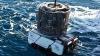 Robot Dives 1.5 Miles, Maps French Shipwreck With 86,000 Images And Recovers Artifacts
 Brain-inspired chip could reduce AI energy use by 70%
 CANCER HAS BEEN CURED
 "This is the first synthetic species," microbiologist J. Craig Venter told 60 Minutes'
 Humanoid robots are hitting the factories at an increasing pace
 Microsoft's $400 Billion Mistake Is Now a $200 Phone With Zero Tracking
 Turn Sand to Stone With Vinegar. Stronger Than Steel. Hidden Since 1627
 This is a bioprinter printing with living human cells in real time
 The remarkable initiative is called The Uncensored Library,...
 Researcher wins 1 bitcoin bounty for 'largest quantum attack' on underlying tech



Trump's plan to confront Iran privately bewilders oil titans as gas prices skyrocket
Trump has privately told his closest advisers that he is frustrated by the 'no deal, no war' stalemate with Iran over control of the Strait of Hormuz.
The President's messaging has left shipowners and oil executives confused by the lack of concrete details, while fears of further escalation from Iran remain a key concern, according to Bloomberg.
'The President wants action. He doesn't want to sit still. He wants pressure. He wants a deal,' said a US official, according to a report from Axios.
The President on Thursday night reviewed plans to send US naval warship through the strait to open by force. Trump pulled out from the plan at the last minute and opted for a more cautious approach.
However, on Sunday night, Trump said the US would escort oil tankers trapped in the Persian Gulf, though he provided no further details.
US Central Command later confirmed the Navy would help commercial ships transit the Strait of Hormuz under an operation dubbed 'Project Freedom,' advising them on how to avoid mines and protecting them from Iranian attacks.
The uncertainty over control of the strait comes as two US-flagged vessels have successfully passed through waterway, the US military said on Monday.
Tehran, meanwhile, has continued launching drones at oil tankers and warned shipping magnates not to move through the waterway without the regime's full approval. The closure of the strait has driven gas prices to some of their highest levels since 2022, averaging $4.40 a gallon, up 30 cents in a week.
'Project Freedom' will reportedly include a vast number of guided-missile destroyers, drones, more than 100 land and sea-based aircraft, and the infantry support of 15,000 troops, CENTCOM announced.
Another US official told Axios that military officers have been authorized to strike immediate threats to naval assets, including Iran's speedboats.
Iran has managed to effectively close off the Strait of Hormuz in recent months through a combination of small attack boats, drones, and sea mines laid in the narrow waterway.
US forces have also established an 'enhanced security area' that advises oil vessels to cross the waterway through Omani waters.
However, vessel traffic remains at a standstill, with most ships transiting Hormuz using the Iranian traffic separation scheme rather than Trump's "Project Freedom" corridor closer to Oman.