










Breaking News
 This madman Alex Karp, the CEO of Palantir and a friend of Peter Thiel, declared the manifesto...
 Meta will cut 8,000 jobs on May 20
 To yuan, or not to yuan, that is not the question.
 Game Theory #21: World War Trump
Top Tech News
 Researchers Turn Car Battery Acid and Plastic Waste into Clean Hydrogen and New Plastic
 'Spin-flip' system pushes solar cell energy conversion efficiency past 100%
 A Startup Has Been Quietly Pitching Cloned Human Bodies to Transfer Your Brain Into
 DEYE 215kWh LiFePO4 + 125,000W Inverter + 200,000W MPPT = Run A Factory Offgrid!!
 China's Unitree Unveils Robot With "Human-Like Physique" That Can Outrun Most People
 This $200 Black Shaft Air Conditions Your Home For Free Forever -- Why Is It Banned in the U.S.?
 Engineers have developed a material capable of self-repairing more than 1,000 times,...
 They bypassed the eye entirely.
 The Most Dangerous Race on Earth Isn't Nuclear - It's Quantum.
 This Plasma Stove Cooks Hotter Than The Sun


Pfizer Reboots Lyme Vaccine Linked to Lyme-Disease-Like Autoimmune Arthritis and...
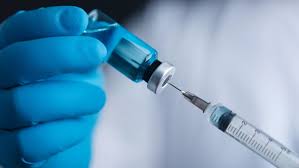
Forces your body to flood bloodstream with antibody proteins that ticks consume during feeding.
Pfizer and Valneva have advanced their experimental Lyme disease vaccine, PF-07307405 (LB6V, formerly VLA15), using the same core biological mechanism that sparked autoimmune arthritis concerns, lawsuits, and the eventual withdrawal of the only previous Lyme vaccine, LYMErix.
The jab works by forcing the body to produce antibodies against a bacterial protein that resembles a protein found in your own joint tissue, meaning those antibodies may also recognize similar structures in your joints and trigger an immune response there.
That means a mechanism previously tied to immune responses against joint tissue—producing Lyme-like symptoms—is now being brought back and positioned for broad public rollout.
Moreover, current data tracks antibody levels in the bloodstream over months, but does not map where those antibodies distribute in human tissues or how repeated boosting affects immune activity over the long term.
The Mechanism Activates Only After a Tick Bites
The vaccine is built to force the body to produce large quantities of anti-OspA IgG antibodies that circulate in the bloodstream.
Those antibodies remain inactive until a tick begins feeding.
At that point, the process engages.
The companies describe it:
"As the tick feeds on the vaccinated person, these antibodies are ingested by the tick as part of its blood meal. Binding of vaccine-induced antibodies to OspA on Borrelia inside the tick inhibits the bacterium's ability to leave the tick."
The antibodies are produced in the human body, but their intended function occurs after they are consumed by the tick.
The activity takes place inside the parasite.
Same OspA Design Behind LYMErix
The approach mirrors the OspA-based strategy used in LYMErix, introduced in 1998 and withdrawn in 2002 after widespread controversy.
At the center of that controversy was molecular mimicry.
The OspA protein contains regions that resemble a human protein known as LFA-1 (leukocyte function-associated antigen-1), which is present on immune cells and in joint tissue. A 1998 Science paper (Gross et al.) identified this overlap, showing that immune responses to OspA could also recognize similar structures on human LFA-1.
In patients with treatment-resistant Lyme arthritis, immune responses directed at OspA were observed to cross-react with LFA-1, raising the possibility that antibodies generated against the bacterial protein could also interact with joint tissue.