










Breaking News
 3/19/26 Joe Kent on How Israel Drove Trump Towards an Unnecessary War with Iran
 Constitutional Government and the Tenth Amendment
 Artemis 2- Orion Lunar Flyby
 Watch: Nick Fuentes Says US Lost Iran War – "Trump Surrendered, Iran Won"
Top Tech News
 Anthropic says its latest AI model is too powerful for public release and that it broke...
 The CIA used a futuristic new tool called "Ghost Murmur" to find and rescue...
 This Plant Replaces All Fertilizer FOREVER. Why Did the FDA Ban It?
 China Introduces Pistol-Like Coil-Gun Based On Electromagnetic-Launch Systems
 NEXT STOP: MARS IN JUST 30 DAYS?!
 Poland's researchers discovered a bacteria strain that destroys pancreatic cancer.
 Intel Partners with Tesla and SpaceX on Terafab
 Anthropic Number One AI in Ranking and Revenue - Making $30 Billion Per Year
 India's indigenous fast breeder reactor achieves critical stage: PM Modi
 Mexico Speeds Up Biometric ID Rollout


Constitutional Government and the Tenth Amendment
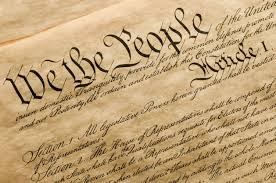
It can be traced back several decades, "close to a century." It is not the work of just one political party or another, but an assault from multiple sources:
The crisis we face today is the culmination of decades of offenses against the Constitution by Democrats and Republicans, justices, presidents, and congresses alike, all of whom have essentially rejected the idea that the Constitution possesses a fixed meaning limiting the power of the U.S. government.
That idea was not a minor aspect of the Constitution; it was the very purpose of the Constitution.
The principle of constitutional government is rendered meaningless if the Constitution is treated as a document whose meaning is endlessly malleable or, even worse, impossible to ascertain. At different times, different parties have deemed it expedient to construe the constitution in whichever way will rubber stamp their political policies. This lack of consensus on the interpretation of constitutional principles is strikingly clear in relation to the Tenth Amendment, which provides that,
The powers not delegated to the United States by the Constitution, nor prohibited by it to the States, are reserved to the States respectively, or to the people.
You might reasonably think the meaning of that provision is self-evident. It seems obviously to reflect the principle that states are sovereign and independent. There would be no point for the thirteen American colonies to have declared independence from Britain only to swear fealty to a new, albeit homegrown, imperial overlord. Gary Galles observes,
Everyone knows about the Federalists who pushed the Constitution. But far less known are the Antifederalists who warned with good reason against the creation of a new centralized government, and just after so much blood had been spilled getting rid of one.
Writing in 1863, Chief Justice Taney observed that the Tenth amendment protects the sovereignty of states—a point that was clearly understood at the time. As Woods and Gutzman put it, the states "remained the final authorities in the areas the Constitution did not delegate to the federal government." That accords with the ordinary and common-sense interpretation of the words of the Tenth amendment.
But to the New York Times, the purpose of the Tenth Amendment is not at all clear—a columnist observed in 1983 that "the meaning of those phrases is not self-evident. Indeed, the Tenth Amendment was long thought to mean little." Those who sought to erase the notion of state sovereignty treated this amendment as a mere footnote stating that in some cases there may be a distinction between state and federal powers. Chief Justice Harlan Fiske Stone is cited with approval for his comment that the Tenth Amendment "states but a truism that all is retained which has not been surrendered."
Murray Rothbard highlighted the problem with this interpretation. It is used as a justification to consolidate and centralize power in the federal government. Courts have interpreted the Tenth Amendment not as a means of limiting federal power, by recognizing such power as vested in the states, but instead as implicitly delegating power to the federal government "through judges' elastic interpretation of the Constitution"—the precise opposite of what was intended.