










Breaking News
 The Difference Between Us and Them
 The Pentagon Has An Air Power Addiction
 Trump's War on Iran Obstructs His Other Goals
 America's 'Pilot Rescue' Happened 10km From Iran's Hidden Nuclear Weapons Stash
Top Tech News
 DARPA O-Circuit program wants drones that can smell danger...
 Practical Smell-O-Vision could soon be coming to a VR headset near you
 ICYMI - RAI introduces its new prototype "Roadrunner," a 33 lb bipedal wheeled robot.
 Pulsar Fusion Ignites Plasma in Nuclear Rocket Test
 Details of the NASA Moonbase Plans Include a Fifteen Ton Lunar Rover
 THIS is the Biggest Thing Since CGI
 BACK TO THE MOON: Crewed Lunar Mission Artemis II Confirmed for Wednesday...
 The Secret Spy Tech Inside Every Credit Card
 Red light therapy boosts retinal health in early macular degeneration
 Hydrogen-powered business jet edges closer to certification


The Pentagon Has An Air Power Addiction
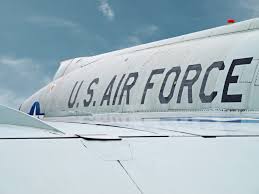
It is a civilization state with thousands of years of continuous existence, a population of ninety million people, and a geography of mountains, deserts, and underground fortifications specifically designed to resist foreign subjugation. The notion that air power alone can decapitate its leadership, destroy its infrastructure, and produce regime change represents a fantasy that scholars have debunked repeatedly over the past century. Yet here we are, over a month into Operation Epic Fury, watching Washington learn these lessons the hard way.
As of early April 2026, the United States and Israel have struck more than 12,300 targets inside Iran according to CENTCOM, with more than 8,000 combat flights flown and more than 850 Tomahawk cruise missiles launched in the first four weeks alone, according to people familiar with the matter who spoke to The Washington Post. Supreme Leader Ali Khamenei is dead. So is Ali Larijani, described by analysts as Iran's de facto leader after Khamenei's death and secretary of its Supreme National Security Council.
Despite all of this, roughly half of Iran's missile launchers remain intact and thousands of one-way attack drones remain in Iran's arsenal despite the daily pounding, according to recent U.S. intelligence assessments obtained by CNN. "They are still very much poised to wreak absolute havoc throughout the entire region," one source familiar with the intelligence told CNN. The IRGC Navy still retains roughly half its capabilities, with "hundreds, if not thousands, of small boats and unmanned surface vessels left," a second source told CNN.
The Strait of Hormuz remains under Iranian influence. No internal uprising has materialized. No regime fracture has occurred. Iran continues launching missiles and drones at American forces and regional allies.
None of this should surprise anyone who has studied the actual historical record on air power and coercion. Robert Pape, a professor of political science at the University of Chicago who also taught at the U.S. Air Force's School of Advanced Airpower Studies and authored Bombing to Win: Air Power and Coercion in War, has analyzed over a century of air power history. His conclusion is unambiguous.
"I've studied every air campaign since World War I, and in all that time, over 100 years, air power alone—without ground forces—has never toppled a regime," Pape told MS Now. "There have been times when there have been pro-democracy movements in combination with the air power; it has never worked. It has not worked in the dumb-bomb age, the smart-bomb age. We've tried so many different combinations, so much intelligence, and it has never worked."
The reason, Pape explains, is political rather than technical. "It's ineffective not because the bombs are technically ineffective. It's ineffective because the bombing triggers politics in the target government and in the target society that work against us. It's a politically self-defeating strategy."
On the current Iran campaign specifically, Pape has written that bombing triggers nationalism in the target society, making positive regime change "almost impossible" and instead producing leaders "more anti-American, more dangerous, more willing to take aggressive risks." The promise of air-led regime change, he argues, is "control without commitment"—while the reality is "escalation without ownership."
Mark Clodfelter, Professor Emeritus of Strategy and Policy at the National War College, documented similar dynamics in his study of the Vietnam air campaign, The Limits of Air Power. The United States dropped roughly eight million tons of bombs over nine years in Southeast Asia and failed to achieve its objectives because "airpower could not affect the outcome of the conflict as long as the VC and North Vietnamese chose to wage an infrequent guerrilla war." His broader conclusion remains relevant today: "Ultimately, Vietnam demonstrates both the limits of airpower and the limits of a strategy dependent on it when trying to achieve conflicting political goals."