










Breaking News
 War Saves Lives! The Peace President's Controlled-Chaos Terror Attack On America's Food, Gas
 Episode 468 | The 6G Push, Paraquat Threat, and the Modern Maternity Crisis
 EXCLUSIVE: ARE YOU AWAKE YET? - Max Igan Exposes The Epstein, Transhumanist...
 Man Successfully Designs mRNA Vaccine To Treat His Dog's Cancer
Top Tech News
 Scientists at the Harbin University of Science and Technology have pioneered a sophisticated...
 Researchers have developed a breakthrough "molecular jackhammer" technique...
 Human trials are underway for a drug that regrows human teeth in just 4 days.
 Singularity Update: You Have No Idea How Crazy Humanoid Robots Have Gotten
 Musk Whips Out 'Macrohard' In Disruptive Tesla-xAI Bid To Shaft Software Companies
 This Bonkers Folding X-Plane Is One Step Closer to Hitting the Skies
 Smart 2-in-1 digital microscope goes desktop or handheld as needed
 Human Brain Cells Merge With Silica To Play DOOM
 Will Yann LeCun Provide The Next Breakthrough In AI?
 Human Brain Cells Merge With Silica To Play DOOM



Gold and Silver Prices Decline Amidst Inflation, Interest Rate Concerns
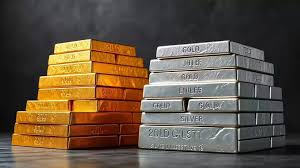
Spot gold fell as much as 1% to approximately $5,020 an ounce before recovering some losses, according to market data. Silver prices were hit harder, dropping nearly 5% and struggling to hold above $80 per ounce.
Market analysts attributed the declines to high energy prices stemming from the ongoing conflict in the Middle East, which are seen as fueling persistent inflation. This, in turn, has reduced investor expectations for imminent interest rate cuts from the Federal Reserve and other global central banks. Analysts also noted that the gold price has failed to benefit from the geopolitical crisis, a departure from its traditional role as a safe-haven asset during times of instability.
Price Movements and Market Data
As of the latest data, gold was trading at $5,019.7 an ounce, while silver was at $80.69 per ounce. The metal has traded within a tight range between $5,000 and $5,200 an ounce in recent sessions after an initial spike following U.S.-Israeli strikes on Iran gave way to a larger drop. Despite the recent pullback, gold remains up 17% for the year, having set a record close to $5,600 an ounce in late January [1].
Silver is tracking for a weekly gain but has underperformed gold on a year-to-date basis with an increase of approximately 10%. The recent price action follows a period of extreme volatility for the metals, including a historic single-day crash in late January where silver fell 35% [2]. The current decline represents a nearly 9% drop for gold from its late-January peak.
Analyst Perspective on Inflationary Pressures
Barbara Lambrecht, a commodity analyst at Commerzbank Research, stated in a note that the gold price continues to fail to benefit from the geopolitical crisis. 'After all, with oil and gas prices rising significantly again this week, the risks of inflation are also increasing. This could force central banks to take countermeasures,' she wrote [1].
Lambrecht's analysis cited the market's assessment that central banks will be reluctant to cut interest rates as a key explanation for the metal's stagnation. Higher interest rates tend to be negative for non-yielding assets like gold. Her view is supported by other market observers who note that inflationary pressures from rising oil prices complicate the monetary policy outlook. Financial writer Matthew Piepenburg noted in an analysis that war, oil, and gold are making headlines for overlapping reasons, with the interplay of oil and gold being a fundamental driver of price action [3].