










Breaking News
 Qatar Expels Iranian Diplomats After Strike On LNG Hub; Israel Attacks Iran's Navy In Caspian Se
 IMEC: Trump's War With Iran Is About Global Trade. Period.
 Rothbard Never Abandoned His Principles
 Trump continues to expel MAGA's best members
Top Tech News
 Scientists at the Harbin University of Science and Technology have pioneered a sophisticated...
 Researchers have developed a breakthrough "molecular jackhammer" technique...
 Human trials are underway for a drug that regrows human teeth in just 4 days.
 Singularity Update: You Have No Idea How Crazy Humanoid Robots Have Gotten
 Musk Whips Out 'Macrohard' In Disruptive Tesla-xAI Bid To Shaft Software Companies
 This Bonkers Folding X-Plane Is One Step Closer to Hitting the Skies
 Smart 2-in-1 digital microscope goes desktop or handheld as needed
 Human Brain Cells Merge With Silica To Play DOOM
 Will Yann LeCun Provide The Next Breakthrough In AI?
 Human Brain Cells Merge With Silica To Play DOOM



Rothbard Never Abandoned His Principles
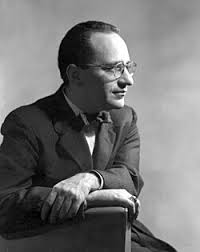
He defended states' rights and saluted the heroes of the South—Jefferson Davis, Robert E. Lee, Stonewall Jackson, and Nathan Bedford Forrest—and that is certainly controversial. So is the fact that, as a student at Columbia, he joined the Strom Thurmond Society, and throughout his life he consistently opposed what he called phony civil rights.
But it does not suffice to characterize Rothbard's political analysis as controversial. That would be to do him a grave disservice. It is also important to note that his views were always rooted in the defense of liberty, and that he never abandoned his principles. In his comment on how Alan Greenspan abandoned his principles in a bid to ingratiate himself with the establishment, David Gordon observes that,
In their attitude toward compromise, Greenspan is the polar opposite to Murray Rothbard. Rothbard could have tailored his views to win the favor of Arthur Burns, who was a family friend, but he refused to do so. He never abandoned his principles.
This is true not only of his economic principles, but also of his political principles. Rothbard's political views were not merely random, reactionary, or contrarian. His aim was not simply to provoke controversy or inspire populism, in the manner of a shock jock. He did not speak loosely or thoughtlessly, with no concern for the ethical implications of what he said.
Rothbard certainly was known as a "happy warrior" with a delightfully witty and humorous turn of phrase, but it would be wrong to assume that this means he was some sort of political jester who attached no significance to fundamental principles of justice in his political analysis. Rather, his views were consistently grounded in the philosophical principles he outlined in The Ethics of Liberty.
In his introduction to that treatise, Hans-Herman Hoppe explains that Rothbard did not forget or abandon his principles when discussing specific political problems. His philosophy was not merely academic or theoretical, bearing no relation to his discussion of real-world problems.
Hoppe describes the Rothbard-Rockwell Report as "the main outlet of Rothbard's political, sociological, cultural and religious commentary" during the years in which it was published, adding that the essential principles underpinning the analysis in RRR, "were already contained in his earlier treatise. In distinct contrast to Nozick, Rothbard did not change his mind on essential questions."
Therefore, it is clear that Rothbard did not abandon his philosophical principles in his commentary on contemporary politics. On the contrary, Hoppe highlights the consistency of these principles in Rothbard's thought:
Indeed, looking back over his entire career, it can be said that from the late 1950s, when he had first arrived at what would later become the Rothbardian system, until the end of his life, Rothbard did not waver on fundamental matters of economic or political theory. Yet owing to the long and intensive work in the history of economic and political thought, a different thematic emphasis became apparent in his later writings, most noticeably in the several hundred articles contributed during the last years of his life. Apart from economic and political concerns, Rothbard increasingly focused his attention on and stressed the importance of culture as a sociological prerequisite of libertarianism.