










Breaking News
 Who Will Stop Him?
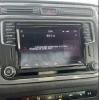 Time to Pay the "Component Protection" Fee
 Pentagon estimates first six days of Iran war cost over $11.3 billion
 Happy Birthday, America. Now Hand Over Your Sovereignty.
Top Tech News
 Musk Whips Out 'Macrohard' In Disruptive Tesla-xAI Bid To Shaft Software Companies
 This Bonkers Folding X-Plane Is One Step Closer to Hitting the Skies
 Smart 2-in-1 digital microscope goes desktop or handheld as needed
 Human Brain Cells Merge With Silica To Play DOOM
 Will Yann LeCun Provide The Next Breakthrough In AI?
 Human Brain Cells Merge With Silica To Play DOOM
 Solar And Storage Could Reshape Rural Electricity Markets
 With World Seemingly At War, DARPA Finds Time To Unveil The X-76
 Renewable Water From Air.
 The world's first diesel plug-in hybrid pickup truck is here



Time to Pay the "Component Protection" Fee
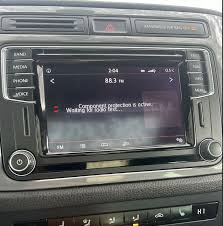
Component Protection.
This is what VW and Audi call the $300-$500 fee owners of their vehicles must pay to "unlock" the software lock embedded in the vehicle's inscrutable maze of subroutines so that a used replacement part you bought, such as a body control module (these things control many functions in new vehicles, including the power windows) or the gauges or the replacement stereo you installed will work. The parts you got may be identical, original VW parts and in working order. You – or your independent repair shop – may have installed the part correctly. But they will not work until you cough up the $300-$500 fee to your local VW/Audi dealer, who is the only one that has access to the VW/Audi Hive Mind server that can interface with the inscrutable maze of subroutines in the vehicle, to "unlock" the system.
It is of course all for our own good. A theft protection measure, you see. If someone were to take the audio system out of your vehicle, it would be of no use to the thief. But then comes a different sort of thievery.
The idea seems to be to effectively force VW owners to deal with VW dealers since no one else can "unlock" the vehicle's inscrutable maze of subroutines. It is a kind of private sector iteration of the way the car insurance mafia forces people – effectively – to buy car insurance, at an exorbitant price because that's what happens when you can't say no to what you're effectively forced to buy. The main difference is that in this instance – as regards the "unlocking" – the transaction does not involve the government. That means you at least have the option of not buying a new car that isn't really yours, because how could it be if you must pay the manufacturer or its dealer network to "unlock" it?
This "unlocking" stuff is not the same thing as paying to get something fixed – because what you're paying for is permission to be allowed to fix the vehicle. The vehicle you paid for, that is at least in a vague legal sense "yours."
It is something like having to pay the government a regular fee – the property tax – in order to not be locked out of the house you paid for, that really isn't your house for just this reason.
It is also a way to make it uneconomical to buy used original and aftermarket replacement parts to repair a vehicle since the money that might have been saved by purchasing a good used or aftermarket part is lost – and probably then some – via the "unlocking" fee you have to pay a dealer in order for it to function. The dealer will of course be happy to sell you a brand-new OEM part for what it would have cost you to buy the less-expensive used or aftermarket part, plus the "unlocking" fee.