










Breaking News
 Is The Government Coming For Our Seeds?
 Looming ice storm could be among worst on record
 The walls are actually closing in on Ilhan Omar and her husband…
 Tesla and XAI's Digital Agent Strategy
Top Tech News
 The day of the tactical laser weapon arrives
 'ELITE': The Palantir App ICE Uses to Find Neighborhoods to Raid
 Solar Just Took a Huge Leap Forward!- CallSun 215 Anti Shade Panel
 XAI Grok 4.20 and OpenAI GPT 5.2 Are Solving Significant Previously Unsolved Math Proofs
 Watch: World's fastest drone hits 408 mph to reclaim speed record
 Ukrainian robot soldier holds off Russian forces by itself in six-week battle
 NASA announces strongest evidence yet for ancient life on Mars
 Caltech has successfully demonstrated wireless energy transfer...
 The TZLA Plasma Files: The Secret Health Sovereignty Tech That Uncle Trump And The CIA Tried To Bury
 Nano Nuclear Enters The Asian Market



Alberta Sees Large Turnout For Petition To Separate From Canada
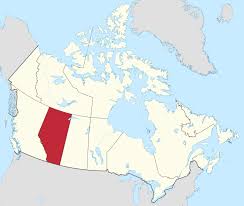
The petition requires at least 177,000 signatures in order to trigger the referendum, which would ultimately decide if the province will separate.
Petitions have 120 days to collect the signatures needed. Pro-separation groups say they could get as many as 1 million signatures, which would be a clear indication that Alberta will leave Canada. Alberta's population is currently 5 million people.
Some petition locations reported as many as 10,000 signatures in a day and the public response is described as "concerning" by critics who want to remain part of Canada's "constitutional monarchy." Alberta is widely considered the most conservative province in the country and has been at odds with the far-left Canadian government (ruled by Ontario progressives).
The referendum would mean a simply Yes/No question for voters on separation. A majority (51% or more) would then lead to a legal process overseen by the Canadian federal government. Come polls indicate that 60% of Albertan citizens are still opposed to the measure, however, the recent turnout for the petition suggests the tide is turning. Recent conflicts with progressive elites in the Canadian government have driven Albertans to question their relationship.
Alberta fought against the leftist government's pandemic lockdowns, church and business closures and draconian vaccination requirements. They remain in opposition to Canada's new gun laws which are incrementally removing all firearms from private hands. They have also been at odds with the federal government over resource development, energy policy, carbon taxation and economic marginalization.
Essentially, Alberta is a different nation when compared to the Canadian norm. It is also a commodity treasure trove that Canada exploits to feed its coffers while rarely giving anything back to provincial citizens.
Canadian courts initially blocked a referendum question on separation, asserting that the implications of the question were too vague and did not align with constitutional requirements. Instead of appealing the decision, Alberta turned to the legislature. Within days, the legislature passed Bill 14, amending the Referendum Act to remove the requirement that referendum questions align with the Constitution. Separatists quickly got a revised referendum question approved, and the petition process resumed
Another obstacle to the separation is a lawsuit brought by the Sturgeon Lake Cree Nation goes far beyond provincial politics. The First Nation is seeking an urgent injunction to stop Alberta's petition process. They say a separation would be in violation of their original treaty with the Crown. The claim sets up a possible loophole allowing the federal government to deny separation, but the notion that a Native treaty supersedes provincial law is rather thin. Alberta's separation would simply mean that the Cree would have to negotiate a new treaty.