










Breaking News
 You have to understand the lies before you can push AI into deeper truths.
 Russian Media and Even the Kremlin Highlight That Trump Acquiring Denmark...
 Welcome to the Singularity
  Putin invited to join Trump's 'Board of Peace,' Kremlin says
Top Tech News
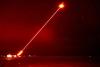 The day of the tactical laser weapon arrives
 'ELITE': The Palantir App ICE Uses to Find Neighborhoods to Raid
 Solar Just Took a Huge Leap Forward!- CallSun 215 Anti Shade Panel
 XAI Grok 4.20 and OpenAI GPT 5.2 Are Solving Significant Previously Unsolved Math Proofs
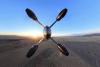 Watch: World's fastest drone hits 408 mph to reclaim speed record
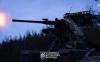 Ukrainian robot soldier holds off Russian forces by itself in six-week battle
 NASA announces strongest evidence yet for ancient life on Mars
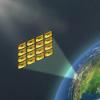 Caltech has successfully demonstrated wireless energy transfer...
 The TZLA Plasma Files: The Secret Health Sovereignty Tech That Uncle Trump And The CIA Tried To Bury
 Nano Nuclear Enters The Asian Market



The US-Israeli Regime Change Operation in Iran
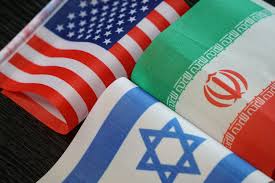
How Iranian Protests Are Reported by the Mainstream Media
According to the New York Times, the mass protests in Iran that the world has been witnessing over the past few weeks represent citizens "demanding an end to the regime", which has responded by violently trying to quash demonstrations.
"Hundreds, perhaps thousands, of people have been killed," the Times reports, citing "rights groups and an Iranian health official."
About 3,000 people have been killed across Iran, according to the anonymous health official, who "sought to shift the blame to 'terrorists' fomenting unrest", the Times adds.
What the demonstrations show, according to the Times, is "that many Iranians may now believe that the Islamic Revolution in 1979 has failed to address their everyday economic needs and has instead focused on extending its military might through its nuclear enrichment and proxy forces in the region."
The newspaper thus characterizes Iran's nuclear program as military in nature, despite Iran's insistence that it is for energy only and the absence of evidence for an active weapons program.
If one reads far enough down the page, one can also learn from the Times that the economic despair in Iran is a consequence of "harsh sanctions imposed by much of the world over its nuclear program."
Near the end, the Times also acknowledges "radicalism among the protesters", with the situation having "turned violent on both sides".
That's quoting Ellie Geranmayeh, an Iran expert at the European Council on Foreign Relations, who added, "The regime and the security services see this as an extension of the U.S.-Israeli war and feel they must go full force to get the terrorists."
The Times thus tacitly concedes that there are terrorists operating in Iran during the mass protests.
A vague reference is then made to the "June war"—meaning the twelve days last summer of US and Israeli airstrikes in Iran, including on three nuclear facilities. According to Iran's Foundation for Martyrs and Veterans Affairs, as reported by Amnesty International, the joint strikes killed at least 1,100 Iranians, including at least 132 women and 45 children.
Among the protesters "aspiring leaders", the Times continues, is Reza Pahlavi, the exiled son of the former Shah of Iran, Mohammad Reza Pahlavi.
The Shah, or king, was overthrown during the 1979 Iranian Revolution led by Ayatollah Ruhollah Khomeini, who was succeeded by Supreme Leader Grand Ayatollah Ali Khamenei.