










Breaking News
 The AI Bird-Flu Scenario They Just Published
 Japan's first robot ambulance works the 9-1-1 lines for humanoids
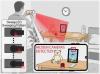 Cheap smartphone add-on pinpoints hidden cameras to shut down spies
 The $600 Tank That Beats a $10,000 Powerwall
Top Tech News
 Terrifying AI Behavior Even Its Creators Couldn't Explain
 WW3 Near-Miss? AI Hallucinated Nuclear Weapons Components Aboard Chinese Vessel Bound For Iran
 Stripe Is Building the Toll Road for the Machine Economy
 Toyota Dakar hopeful swaps twin-turbo V6 for hydrogen fuel cells
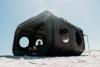 4-min turbo-inflatable cubic camp castle is now available in the USA
 Researchers Used Claude To Hack OpenAI Employee Accounts
 Chinese Scientists Develop New Oil Refining Method That Cuts Energy Use by 90%
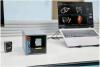 World's smallest CT scanner fits in the palm of your hand
 The Tesla Roadster will blow people's minds
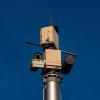 Peter Thiel-Funded Company Anduril to Triple the Number of Autonomous Surveillance Towers...



Everyday sunlight changes your brain's focus, speed and alertness

The University of Manchester researchers wanted to gain a better understanding of whether sunlight exposure had meaningful cognitive benefits – particularly when tested in nature, not a lab. The team assessed the personal light exposure of 58 UK adults without any significant circadian challenges, over a period of seven days. An additional 41 participants took part in a lab experiment that featured pupillometric and psychophysical tests designed to measure melanopsin-driven visual responses – how their pupils responded to light.
The 58 participants wore a daylight exposure monitoring device on their wrist that continuously recorded how much biologically relevant light reached them, day and night. In other words, how the light influenced their internal body clocks. They also used an app called Brightertime, developed at the university, that gathered data on cognitive performance.
The participants were scored on subjective sleepiness (Karolinska Sleepiness Scale), sustained attention (Psychomotor Vigilance Task), working memory (three-back task) and visual search performance. Each task produced measurable reaction times, accuracy and error rates, later reduced into key factors via a pattern-finding analysis.
"Light is a fundamental environmental cue that governs numerous biological processes in humans, including body clocks, sleep, and cognition," said lead author Dr. Altug Didikoglu from the University of Manchester. "However, despite substantial findings from controlled laboratory studies, little is known about how these effects translate to real-world environments, where light exposure is dynamic and intertwined with daily routines."
The team measured aspects of light exposure – how bright the natural light was in the 30 minutes to two hours before each phone-based cognitive test, how bright the day was overall, when the darkest periods occurred (usually when lights were off at bedtime) and how regular or irregular the participants' daily time in natural light was.
Importantly, the researchers examined both immediate light exposure before each test and broader weekly patterns, which were then compared with the results from repeated smartphone measures of sleepiness, attention, working memory and visual search performance.
They found that how often and when you're exposed to light in daily life can meaningfully shape alertness and cognitive speed, even in healthy adults with nine-to-five routines or regular night-sleep cycles. But the cognitive impact was more nuanced than this.
Recent light exposure (in those 30 to 120 minutes) was linked to feeling less sleepy and faster reaction times in tests measuring sustained attention and working memory. And the impact was strongest the more recent the light exposure had been (30 to 90 minutes), where reaction speed without increased error rates were observed.
Meanwhile, habitual daytime light exposure – consistent across the seven days – was tied to faster reaction times on the vigilance task and fewer errors in the tests measuring working memory and visual search skills.