










Breaking News
 Charlie's Killer Was MKUltra'd?
 Doctors are finally admitting that biopsies Spread Cancer…
 We MUST keep talking about this, demand Voter ID. Joe Rogan and Elon Musk on Fraud
 Nick Shirley exposes there are 1,200 medical transport companies in Minnesota.
Top Tech News
 The First Production All-Solid-State Battery Is Here, And It Promises 5-Minute Charging
 See inside the tech-topia cities billionaires are betting big on developing...
 Storage doesn't get much cheaper than this
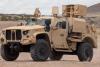 Laser weapons go mobile on US Army small vehicles
 EngineAI T800: Born to Disrupt! #EngineAI #robotics #newtechnology #newproduct
 This Silicon Anode Breakthrough Could Mark A Turning Point For EV Batteries [Update]
 Travel gadget promises to dry and iron your clothes – totally hands-free
 Perfect Aircrete, Kitchen Ingredients.
 Futuristic pixel-raising display lets you feel what's onscreen
 Cutting-Edge Facility Generates Pure Water and Hydrogen Fuel from Seawater for Mere Pennies



The End Of NATO?
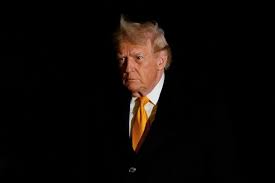
While the Doctrine, as a tool of policy, warns Europe to keep its hands off, it stopped short of declaring that the United States would act as nanny for these fledgling states.
Don's interpretation of the Doctrine, however, seems a bit different — though not entirely unique. Indeed, digging a massive trench to split a country in two is a rather explicit form of U.S. intervention, though the recent operation in Venezuela marks the first time we've seen something like this from Washington since the Bush Administration ('H', not 'W'). and the current Administration's rhetoric surrounding the operation certainly sets it apart.
Secretary of State Marco Rubio clarified: "There's not a war. [There is a] war against drug trafficking organizations—not a war against Venezuela." Some might argue that a war is still a war regardless of how the opposition is defined, but Rubio would disagree. He has also made the core intentions of the U.S. clear: "This is the Western Hemisphere. This is where we live—and we're not going to allow the Western Hemisphere to be a base of operation for adversaries, competitors, and rivals of the United States."
As for Maduro, the situation appears straightforward. He is expected to be convicted by the Southern District of New York on at least one of the charges levied against him and will likely spend the rest of his life in prison. Maduro, however, has asserted that he is "not guilty of narco-terrorism charges," proclaiming "I am innocent. I am not guilty. I am a decent man."
On Monday, Vice President Delcy Rodriguez was sworn in as acting president, following Trump's weekend comments to The Atlantic: "If [Rodriguez] doesn't do what's right, she is going to pay a very big price—probably bigger than Maduro."
Rodriguez's tone has shifted dramatically since the weekend. Initially condemning Maduro's arrest as "barbaric," she now extends an olive branch to Washington, stating: "We invite the U.S. government to work together on a cooperative agenda focused on shared development, within the framework of international law, and to strengthen lasting community coexistence."
But Venezuela's future is still uncertain. There has been a whirlwind of headlines questioning how much control the U.S. will take over Venezuela's energy infrastructure or if they will ultimately end up taking control at all. Trump has thus made his position clear that he wants to be "very strongly involved" in the Venezuelan oil industry.