










Breaking News
 Mamdani's Marxist Grocery Grab: Socialist Mayor Uses $70 Million of Your Tax Dollars...
 Socialist NYC Mayor Demands ID to Buy Cheap Groceries - But Screams "Racism" at Voter ID
 Big Tech's dirty little AI secret: It's one giant 'money-laundering circle jerk'…
 Part I: The Vaccine Industry Exposed: How it Rigs Trials, Suppresses Evidence,...
Top Tech News
 Idaho's High Desert Becomes Hot Spot For Nuclear Power Revolution
 The World's Largest Electric Aircraft Is About to Take Its First Flight
 Tesla Cybercabs and Superchargers Will Act as Mini Cell Towers for SpaceX Starlink
 Elon Vows AI-Made 'Odyssey' After Blasting Nolan's Take On Homer
 Anthropic is launching its own drug discovery programs for rare diseases using Claude...
 SpaceX AI Satellites Will Have 250 Kilowatts of Power
 Chinese researchers have developed a sodium-metal battery that can fully charge in just 4 minutes...
 SpaceX Starship Flight 13 in 3 Days - Thursday July 13
 Chinese Scientists Develop Nuclear Battery Using Carbon-14
 Teleoperated humanoid robots complete first-ever live surgery



California Alternative Homes Made from Ferro-Cement Are Fire Resistant
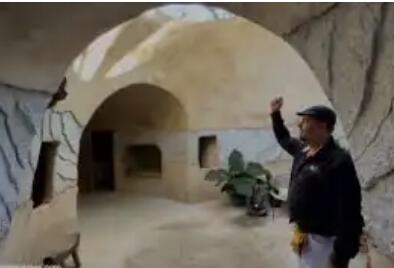
It was less expensive to build than a house using traditional building materials. Most of the home's structures have semi-outdoor spaces that are not taxed as living space.
Twenty years ago, Zach and Allison Anderson began digging into a hillside on their property in Grass Valley, California, to escape the heat, cold, and fire risk above ground. What started as a simple experiment has grown into a labyrinth of domed rooms, tunnels, and courtyards — a cluster of underground spaces that feels like the beginning of a small, earth-sheltered village.
Carved and sculpted largely by hand, their underground world bends to the shape of the hillside. Zach has developed an affordable way to build below the surface without the gloom of a bunker or the climate mismatch of an Earthship.
By keeping the insulated living core small and surrounding it with naturally tempered indoor-outdoor rooms, he's created spaces that stay comfortable year-round while keeping both construction costs and property taxes low.
From an underground fishpond to a grotto-turned-living room where parakeets fly freely under a skylit dome, every corner reflects Zach's inventiveness. Secret bookshelves reveal hidden pantries and stairways; a "living well" — his version of a living wall — channels cool, fragrant air from plants into the heart of the home.
Their most recent build, a compact underground guest house, may be the most accessible part of the project — a small prototype for anyone dreaming of a simple, affordable home built with the earth. With just enough space for a Murphy bed and kitchenette, it opens into shaded outdoor rooms that stay naturally temperate thanks to the surrounding soil.