










Breaking News
 The AI Bird-Flu Scenario They Just Published
 Japan's first robot ambulance works the 9-1-1 lines for humanoids
 Cheap smartphone add-on pinpoints hidden cameras to shut down spies
 The $600 Tank That Beats a $10,000 Powerwall
Top Tech News
 BEYOND THE MOON: NASA plans a nuclear-powered fleet to push DEEPER into space
 Big Oil Backs Mazama's $135 Million Bet On Superhot Geothermal
 Quantum compass takes flight on Northrop's Lumberjack drone
 Terrifying AI Behavior Even Its Creators Couldn't Explain
 WW3 Near-Miss? AI Hallucinated Nuclear Weapons Components Aboard Chinese Vessel Bound For Iran
 Stripe Is Building the Toll Road for the Machine Economy
 Toyota Dakar hopeful swaps twin-turbo V6 for hydrogen fuel cells
 4-min turbo-inflatable cubic camp castle is now available in the USA
 Researchers Used Claude To Hack OpenAI Employee Accounts
 Chinese Scientists Develop New Oil Refining Method That Cuts Energy Use by 90%



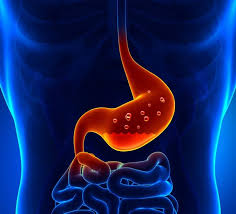
Stomach Acid Is Vital for Health
Presently, 68% of U.S. adults are estimated to have at least one prescription and on average, American adults are on four different medication.
Since doctors are extremely reluctant to terminate existing prescriptions, this creates a scenario where people get placed on more and more drugs as they age (some of which are for treating the side effects of other drugs they are taking).
This situation is even worse for the elderly, who have more time to be put on an increasing number of medications, and due to their altered physiology, are also the most vulnerable to the harmful effects of those medications. For example, from 2009-2016, after two billion office visits were assessed, it was found that for adults over 65, 65.1% were on two or more drugs, 48.9% were on four or more, and 36.8% were on more than five (with the highest use occurring in the oldest Americans).
One of the best illustrations of the problem came from a study that compared 119 disabled elderly adults living in nursing homes to 71 matching controls. These patients (on average, were on 7.09 medications) were screened for which of their medications clearly met the existing criteria for being discontinued (on average 2.8 per patient). After those medications were discontinued in the test group, when compared to the controls who remained on all of their existing prescriptions, it was found that:
•The death rate dropped by 53% (in one year, 45% of the control group died, whereas 21% of the test subjects died).
•The annual rate of hospital referrals dropped by 60.7% (30% of the controls vs. 11.8% of the study).
•Not surprisingly, there were also significant cost savings from withdrawing the unneeded medications.
In short, doing nothing except terminating some of the most egregious prescriptions for our elders (who often lack the autonomy to refuse their prescriptions) resulted in a 23% reduction in their death rate. When you consider that many of these drugs are approved for much smaller reductions of the death rate, and that they frequently have a variety of other concerning side effects (e.g., triggering dementia), the absurdity of this situation (e.g., that this pivotal study never changed how we practice medicine) becomes apparent.