










Breaking News
 The AI Bird-Flu Scenario They Just Published
 Japan's first robot ambulance works the 9-1-1 lines for humanoids
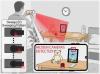 Cheap smartphone add-on pinpoints hidden cameras to shut down spies
 The $600 Tank That Beats a $10,000 Powerwall
Top Tech News
 BEYOND THE MOON: NASA plans a nuclear-powered fleet to push DEEPER into space
 Big Oil Backs Mazama's $135 Million Bet On Superhot Geothermal
 Quantum compass takes flight on Northrop's Lumberjack drone
 Terrifying AI Behavior Even Its Creators Couldn't Explain
 WW3 Near-Miss? AI Hallucinated Nuclear Weapons Components Aboard Chinese Vessel Bound For Iran
 Stripe Is Building the Toll Road for the Machine Economy
 Toyota Dakar hopeful swaps twin-turbo V6 for hydrogen fuel cells
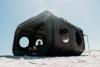 4-min turbo-inflatable cubic camp castle is now available in the USA
 Researchers Used Claude To Hack OpenAI Employee Accounts
 Chinese Scientists Develop New Oil Refining Method That Cuts Energy Use by 90%



Nano-cubosome eyedrops target macular degeneration without needles
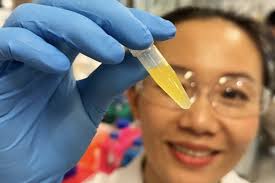
Researchers at the Royal Melbourne Institute of Technology (RMIT), along with scientists from the Centre for Eye Research Australia (CERA), used a nano-carrier formula to deliver lutein – a macular pigment found in leafy greens and eggs – to the back of the eye, a target usually reachable only by injection. In mice, the formulation reached retinal tissue and stayed shelf-stable at room temperature for months, setting it up as an easier, preventive therapy that could offset the need for injections.
The team developed a patented nanotech "cubosome" delivery system – like tiny lipid boxes that shield fragile cargo – then loaded it with lutein extracted from Gac fruit. Gac fruit (Momordica cochinchinensis) is a bright orange-red melon native to Southeast Asia (g?c in Vietnam). Its soft, red pulp is extremely high in carotenoids (especially lycopene and beta-carotene) and lutein and zeaxanthin. In the lab, the eyedrops protected retinal cells from stress linked to vision loss – and, importantly, they reached the target, the retina, in the animal model.
"Our cubosome carriers act like tiny shields, keeping the compound safe and releasing it in a controlled way once it's inside the eye," said co-lead researcher Charlotte Conn, from RMIT's School of Science.
While in the early stages, it's cleared one of the big hurdles with this sort of treatment – getting enough of a delicate molecule through the cornea and on to the posterior eye in a controlled and targeted way. And because the researchers have developed a blueprint of a delivery system, it opens up the possibility to transport different kinds of drugs to the retina.
"Frequent eye injections are uncomfortable and can be distressing for patients," said Dao Nguyen, who co-led the research at RMIT, and is now at Deakin University's School of Medicine. "People could use the eyedrop as a preventative measure that could reduce the risk of developing late-stage diseases and the need for injections."
Lutein concentrates in the macula, where it helps filter high-energy blue light and dial down oxidative stress – two contributors to retinal damage. Plant-derived compounds (not just carotenoids like lutein and zeaxanthin but also polyphenols) that act on inflammatory and oxidative pathways have the potential to help preserve eye health and protect against age-related degeneration. However, supplements and diet are less effective ways of getting these beneficial compounds to where they need to go; many molecules are unstable and have poor bioavailability, so a smart system of delivery straight to the retina – which is also safe to use – would be a game-changer.
"This is a technology with broad potential," said team leader Tien Huynh, an associate professor at RMIT's School of Science. "We've shown it can protect fragile ingredients and carry them safely to the back of the eye, which has long been a barrier for treatments."