










Breaking News
 COMEX Silver: 21 Days Until 429 Million Ounces of Demand Meets 103 Million Supply. (March Crisis)
 Marjorie Taylor Greene: MAGA Was "All a Lie," "Isn't Really About America or the
 Why America's Two-Party System Will Never Threaten the True Political Elites
 Generation Now #7 – Youth in Davos | Youth Pulse 2026 | Skills That Matter
Top Tech News
 How underwater 3D printing could soon transform maritime construction
 Smart soldering iron packs a camera to show you what you're doing
 Look, no hands: Flying umbrella follows user through the rain
 Critical Linux Warning: 800,000 Devices Are EXPOSED
 'Brave New World': IVF Company's Eugenics Tool Lets Couples Pick 'Best' Baby, Di
 The smartphone just fired a warning shot at the camera industry.
 A revolutionary breakthrough in dental science is changing how we fight tooth decay
 Docan Energy "Panda": 32kWh for $2,530!
 Rugged phone with multi-day battery life doubles as a 1080p projector
 4 Sisters Invent Electric Tractor with Mom and Dad and it's Selling in 5 Countries



Did Brussels Interfere In Europe's Elections? Fallout Spreads
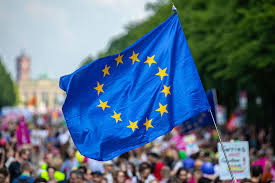
Rather than being dismissed as a partisan document from Washington, the findings are increasingly being invoked across the continent as evidence that the European Commission has crossed the line from regulation into political intervention.
At the centre of the controversy is the alleged use of the EU's Digital Services Act (DSA)—a law intended to regulate online platforms—as a means of shaping the electoral playing field. The report alleges that the European Commission pressured major social media companies to suppress lawful political speech ahead of elections.
The content targeted was not illegal but politically inconvenient. It included EU-critical commentary, scepticism about migration policy, criticism of gender ideology, so-called "populist" narratives, and even political satire. For critics, this amounts to ideological censorship carried out under a legal veneer.
Hungary fears Brussels playbook could be used again
In Hungary, where parliamentary elections are approaching, the report has been interpreted as a warning of tactics that could soon be deployed domestically. Balázs Orbán, political director to Prime Minister Viktor Orbán, has argued that the documents reveal a pattern of interference already applied elsewhere in Europe and now potentially poised to be replicated in Budapest.
Orbán argues that the report shows digital election interference is no longer theoretical but already documented elsewhere in Europe. The categories allegedly targeted—migration-critical content, opposition to gender ideology, and elite-critical narratives—closely mirror the political fault lines on which Hungary has long clashed with Brussels.
Hungary remains one of the few EU governments openly opposing escalation in the Ukraine war, rejecting new fiscal burdens on families, and resisting further centralisation of power in Brussels. Orbán has accused the EU establishment of seeking regime change, pointing to the active role of European People's Party president Manfred Weber in campaigning against the governing Fidesz–KDNP alliance and in favour of opposition forces aligned with Brussels.
For the Hungarian government, the conclusion is stark: digital censorship is no longer an exceptional response to illegal content, but a political instrument deployed when voters cannot be relied upon to deliver the "right" outcome.
Romania's annulled vote returns to centre stage
Romania has emerged as the most dramatic and controversial case cited by critics reacting to the report. The annulment of Romania's 2024 presidential election—after nationalist candidate C?lin Georgescu unexpectedly won the first round—has long raised questions both domestically and abroad. The report has intensified those doubts, particularly among opposition figures.