










Breaking News
 The AI Bird-Flu Scenario They Just Published
 Japan's first robot ambulance works the 9-1-1 lines for humanoids
 Cheap smartphone add-on pinpoints hidden cameras to shut down spies
 The $600 Tank That Beats a $10,000 Powerwall
Top Tech News
 BEYOND THE MOON: NASA plans a nuclear-powered fleet to push DEEPER into space
 Big Oil Backs Mazama's $135 Million Bet On Superhot Geothermal
 Quantum compass takes flight on Northrop's Lumberjack drone
 Terrifying AI Behavior Even Its Creators Couldn't Explain
 WW3 Near-Miss? AI Hallucinated Nuclear Weapons Components Aboard Chinese Vessel Bound For Iran
 Stripe Is Building the Toll Road for the Machine Economy
 Toyota Dakar hopeful swaps twin-turbo V6 for hydrogen fuel cells
 4-min turbo-inflatable cubic camp castle is now available in the USA
 Researchers Used Claude To Hack OpenAI Employee Accounts
 Chinese Scientists Develop New Oil Refining Method That Cuts Energy Use by 90%



Scientists Find a Switch That Could Stop Osteoporosis, Making Bones Stronger in Old Age
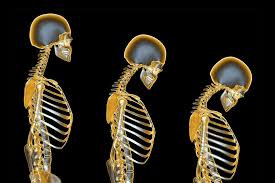
Discovering new targets for drug development is therefore a key step towards better therapies.
In a recent study, scientists at Leipzig University in Germany demonstrated that the G protein receptor called GPR133 plays a central role in building and maintaining healthy bone
"If this receptor is impaired by genetic changes, mice show signs of loss of bone density at an early age—similar to osteoporosis in humans," explains Professor Ines Liebscher, lead investigator of the study published in Nature.
The team was able to significantly increase bone strength in both healthy and osteoporotic mice using the substance AP503, which was recently identified as a stimulator of GPR133.
In bone tissue, GPR133 is activated through the interaction of neighboring bone cells and mechanical strain. This triggers a signal that stimulates bone-forming cells (osteoblasts) and inhibits bone-resorbing cells (osteoclasts).
The result is stronger, more resilient bones.
In the future, it could be used both to further strengthen healthy bones and to rebuild weakened ones—for instance, in cases of osteoporosis in women going through menopause.
Great potential for an aging population
In an earlier study, researchers at Leipzig University had already found that activation with AP503 also strengthens skeletal muscle.
"The newly demonstrated parallel strengthening of bone once again highlights the great potential this receptor holds for medical applications in an aging population," says Dr Juliane Lehmann, lead author of the study and a researcher at the Rudolf Schönheimer Institute of Biochemistry.
The Leipzig research team is already working on several follow-up projects to further investigate the role of GPR133 in the body.