










Breaking News
 Bessent Declares All Iran Airlines To Be 'Shut Down Around The World' Wednesday
 Trump Pushes Zelensky To Halt Russia Refinery Attacks Amid High Diesel
 Verizon Says Cut Cable Behind FAA Ground-Stops East Coast Airports, Not Their Fault
 The AI Bird-Flu Scenario They Just Published
Top Tech News
 BEYOND THE MOON: NASA plans a nuclear-powered fleet to push DEEPER into space
 Big Oil Backs Mazama's $135 Million Bet On Superhot Geothermal
 Quantum compass takes flight on Northrop's Lumberjack drone
 Terrifying AI Behavior Even Its Creators Couldn't Explain
 WW3 Near-Miss? AI Hallucinated Nuclear Weapons Components Aboard Chinese Vessel Bound For Iran
 Stripe Is Building the Toll Road for the Machine Economy
 Toyota Dakar hopeful swaps twin-turbo V6 for hydrogen fuel cells
 4-min turbo-inflatable cubic camp castle is now available in the USA
 Researchers Used Claude To Hack OpenAI Employee Accounts
 Chinese Scientists Develop New Oil Refining Method That Cuts Energy Use by 90%



It's Not "Recreational" Anymore
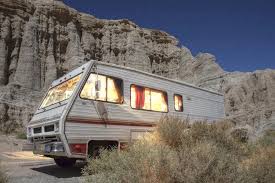
The take-them-with-you portable homes, in other words, that people buy because they don't like sleeping on the ground or in a tent or a hotel when they go on vacation.
Increasing, they're being used as homes – by people whose next option is sleeping on the street.
In California, the government that caused this problem in the first place – by making homes unaffordable to buy and to keep (via obnoxious "property taxes," as this form of rent is styled) – is benevolently coming to the rescue by making it legal to live – as Chris Farley used to say – in a van down by the river.
Or curbside.
But only if you're a college kid or faculty member who can't afford another place to stay. Politico reports that "With one in four California community college students experiencing homelessness in the past year, Democrats – who have a supermajority in the statehouse – face increasing pressure to deliver on affordability issues."
Solution? Stop "busting" people for living in their RVs.
State Assemblyman Corey Jackson, who has "a doctorate in social work," says "lawmakers can build long-term solutions while offering an immediate stopgap for a 'worst case scenario' " according to Politico.
The worst case scenario has, of course, already happened. There was time when in America only vagrants slept on the streets because anyone who didn't want to – who was willing to work a 40 hour week – didn't have to. Because they could afford to sleep inside an apartment or a single family home.
It is now the case that tens of thousands – maybe more – are living in the streets of California's major cities because many of them can't afford the rents or the taxes that function as rents. Nationally, the average cost of a new home is about $400,000 now; in many parts of California – especially the parts anywhere near major cities such as LA and San Francisco – it is much higher. How many people under 30 can come up with the 10 percent in cash generally needed to qualify for a 30 year mortgage on a $400,000 home? Ten percent of that is $40,000. In cash. Good luck with that. How many people can come up with the rent, when it's 30 percent higher (about $2,400 per month) than the national average?
On the other hand, $10k or less can buy you a used RV and many people can still afford that.