










Breaking News
 Iran halts Hormuz traffic, warns of ceasefire withdrawal if Israel strikes Lebanon
 Deere & Co agrees to pay $99 million to settle 'right to repair' lawsuit
 Kennedy rewrites rules on CDC panel after judge blocks childhood vaccine changes
 Republican to replace Marjorie Taylor Greene, but Democrats hail gains in vote
Top Tech News
 China Introduces Pistol-Like Coil-Gun Based On Electromagnetic-Launch Systems
 NEXT STOP: MARS IN JUST 30 DAYS?!
 Poland's researchers discovered a bacteria strain that destroys pancreatic cancer.
 Intel Partners with Tesla and SpaceX on Terafab
 Anthropic Number One AI in Ranking and Revenue - Making $30 Billion Per Year
 India's indigenous fast breeder reactor achieves critical stage: PM Modi
 Mexico Speeds Up Biometric ID Rollout
 Homemade solar drone smashes endurance record with 5+ hours aloft
 This Home Flywheel Makes Storing Solar 90% Cheaper -- And It Works Forever!
 Physicists captured a crystal made only of electrons, forming a honeycomb pattern without atoms...



Retro Spaceplane aces test for space station cargo missions
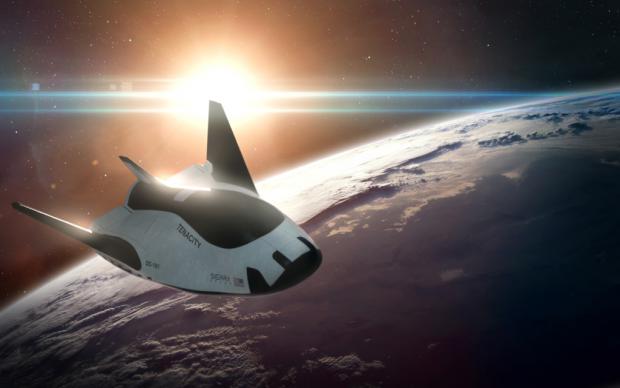
Cargo missions to the International Space Station (ISS) are as common as milk runs on Earth, yet, despite the orbital lab entering its last five years of service, there are still a few surprises in NASA's commercial program to keep it supplied.
One of these is Dream Chaser, which looks very different from the Russian Progress, Spacecraft Dragons, and the Northrop Grumman Cygnus. This year, Japan will add its HTV-X cargo ship and Dream Chaser, which looks very different from the capsules and cans that have been used up until now.
If Dream Chaser looks like a blast from the past, it's not surprising. Not only is it a spaceplane like the NASA Space Shuttle that lifts off atop a conventional rocket booster and lands back on Earth using a conventional runway, it's also derived from NASA's HL-20 Personnel Launch System spaceplane concept of the 1980s, and is a descendant of the remarkable X-20 Dyna-Soar spaceplane that the US Air Force wanted for its own missions back in the 1960s.
Though it looks a bit Shuttle-ish, Dream Chaser is more of a lifting body, with the fuselage of the spacecraft itself doing much of the work of a wing. It was originally a contender for ferrying astronauts to and from the ISS, but after losing out to SpaceX and Boeing, current parent company Sierra Space converted it to an uncrewed cargo version called the Dream Chaser Cargo System (DCCS).
This version does away with the passenger area and includes an expendable cargo module mounted with solar panels and the capability of taking 11,000 lb (5,000 kg) of pressurized cargo and 1,100 lb (500 kg) of unpressurized cargo to orbit, and returning 3,860 lb (1,750 kg) of cargo to Earth with maximum re-entry forces of 1.5 g.
The recent Joint Test 10B demonstration tests in Louisville, Colorado were aimed at showing the Dream Chaser can handle payloads under specified conditions, including the ability to supply them with power, air-cool them, and handle data between the payloads and Earth.
Along with communications links between the payloads and Sierra Space's mission control room and NASA's Marshall Spaceflight Center (MSFC) in Huntsville, Alabama, the tests included three payloads: the Polar cryogenic preservation system for transporting scientific samples, the Powered Ascent Utility Locker (PAUL) for charging CubeSats during ascent, and NASA's Single Stowage Locker, which is a standard stowage system for experiments and other payloads.