










Breaking News
 10 Unexpected Consequences Of An Economic Crisis Nobody Is Talking About
 Trump says RAF Fairford terror suspects were 'looking to do big damage' to US forces as Iran
 Syria Opens Overland Fuel Transit Route To Iraq Amid Hormuz Closure
 New Jersey Microsoft-Linked Data Center Hit With Record Fine Over Unpermitted Gas Generators
Top Tech News
 Tesla Model 3 killer charges from 10 to 97% in just 9 minutes
 World-first unpowered DNA computer sets speed record
 I Power 5 Buildings Off-Grid. Here's How
 The US government is pushing hard to get a working nuclear fission reactor into space by late 2028
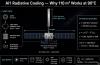 SpaceX Starmind AI in Space Radiator
 China Will Dominate Global Nuclear Energy Through 2035, Analyst Says
 These Absolutely Wild-Looking EVs Are Saudi Arabia's First Homegrown Cars
 BEYOND THE MOON: NASA plans a nuclear-powered fleet to push DEEPER into space
 Big Oil Backs Mazama's $135 Million Bet On Superhot Geothermal
 Quantum compass takes flight on Northrop's Lumberjack drone


Is the world ready for the transformational power of fusion?
Imagine:
One day in the early 2030s, an engineer at a newly constructed power plant near Richmond, Virginia, in the United States, will press a button. It will ignite the same reaction that takes place in our sun's core.
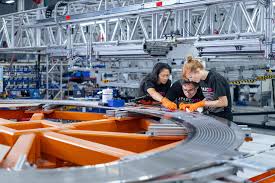
Inside a doughnut-shaped machine called a 'tokamak,' hydrogen isotopes will collide at enormous speed, fusing into helium. This reaction will produce 400 megawatts (MW) of clean, firm electricity, enough for a small city. This electricity will hit Virginia's power grid nanoseconds later, making nearby residents the first human beings to benefit from commercial fusion power generation.
By the time their children retire, fusion may be the world's dominant energy source, ushering in an era of energy abundance, not scarcity. And it will be the cheapest reliable power, and incidentally, the cleanest power too.
Fusion is the future of the global energy sector — the near future. While it may not happen exactly as we've just described, the first fusion power plant will almost certainly begin operations shortly after President-elect Trump's second term expires.