










Breaking News
 Is Big Pharma Selling Postpartum Depression to New Moms?
 Make Men Men Again: Low T Is Now a National Defense Problem
 Druski: They're Lying To You About Overnight Success!
 $6.27 Diesel Just Hit Harvest. The Grocery Aisle Hasn't Felt It Yet.
Top Tech News
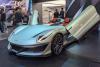 Tesla Model 3 killer charges from 10 to 97% in just 9 minutes
 World-first unpowered DNA computer sets speed record
 I Power 5 Buildings Off-Grid. Here's How
 The US government is pushing hard to get a working nuclear fission reactor into space by late 2028
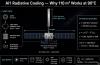 SpaceX Starmind AI in Space Radiator
 China Will Dominate Global Nuclear Energy Through 2035, Analyst Says
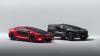 These Absolutely Wild-Looking EVs Are Saudi Arabia's First Homegrown Cars
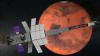 BEYOND THE MOON: NASA plans a nuclear-powered fleet to push DEEPER into space
 Big Oil Backs Mazama's $135 Million Bet On Superhot Geothermal
 Quantum compass takes flight on Northrop's Lumberjack drone


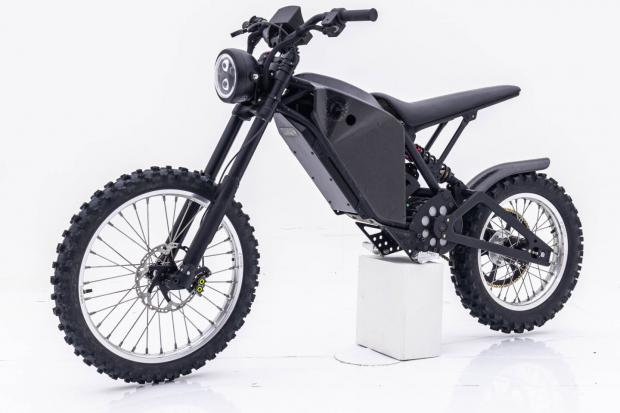
Armstrong EB1 e-motorbike combines big-bike speed with small-bike weight
Armstrong has been working as an engineer, CAD modeler and fabricator since 1995. And while he was based out of California for the early part of his career, he moved to Canada in 2006. There, he has been instrumental in projects such as the Bison electric pickup truck, the Kestrel and Project Arrow electric cars, plus the Daymak Spiritus "crypto-mining" electric three-wheeler.
Now, he's the president of his own company, Armstrong Electric Vehicles. The startup began operations near Calgary, Alberta, last year, and is currently developing an off-road-only electric motorbike known as the Armstrong EB1.
As far as basic specs go, the bike features a handmade 4130 chromoly steel trellis frame, an aluminum swingarm, the buyer's choice of hemp or carbon fiber body panels, and a total weight of just 146 lb (66 kg). Its 6,000-watt brushless DC motor takes it to 60 mph (96 km/h) in about 3.5 seconds, and delivers a top speed of approximately 68 mph (110 km/h).
Power is provided by a house-brand 2.5-KWh/72-V lithium-ion battery pack, which should be good for a range of around 56 miles (90 km) per 1.5-hour charge. It can be removed for recharging, or for swapping with a freshly-charged second battery.
Utilizing an integrated touchscreen display, riders can choose between six drive modes. Among these are Walk mode, for pushing the bike around at a maximum top speed of 3 mph (5 km/h); Snow mode, for super-high torque and low speed; Eco mode, for maximum efficiency; Race mode, for full power; and a Custom mode in which users can save their own settings … or, they can use the settings of a pro rider.