










Breaking News
 America Without Religion: The Shocking Truth No One Wants to Admit
 ALL IN: Trump-Endorsed Mike Lindell Steps Down as MyPillow CEO to Focus 100% on Minnesota...
 America Reaps What Trump Sows: The Price of Policing the Globe
 Candace Owens Releases Video of Man on Rooftop and Other Inflammatory Evidence…
Top Tech News
 Voyager 1 approaches one light day from Earth
 Visual Implants
 Renewable Energy Breakthrough! World's Most Efficient Tesla Turbine System
 I Told You So
 Meet Sunbird, a nuclear fusion-powered space tug concept from Pulsar Fusion.
 China and Russia launch 29-nation AI alliance to rival western control of technology
 BREAKING: China has begun manufacturing domestically developed Immersion Deep...
 Idaho's High Desert Becomes Hot Spot For Nuclear Power Revolution
 The World's Largest Electric Aircraft Is About to Take Its First Flight
 Tesla Cybercabs and Superchargers Will Act as Mini Cell Towers for SpaceX Starlink



New EV Air Conditioner Refrigerant Said To Extend Range By 50%
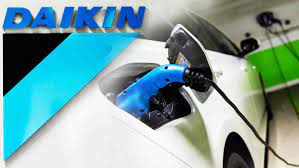
In extreme temperatures, cabin cooling and heating eat up significant amounts of power from an EV's battery. As a result, there are many gains to be made in terms of boosting driving range by making heating/cooling systems more efficient.
That's where Japanese top air conditioner maker Daikin Industries comes in, as the company claims it has developed a refrigerant for EVs that can extend their range by up to 50%, with the product scheduled to go on sale by 2025.
It is obviously great news and, as the report from Nikkei Asia reveals, Daikin's new refrigerant has a boiling point of about minus 40 C, which is 10 to 15 degrees lower than the product currently used by EV makers worldwide.