










Breaking News
 A Disabled Woman. A Penthouse. A City Going Dark.
 France Is Running Out Of Fuel: 16% Of French Gas Stations Are Reporting Outages...
 His God
 How Much More "Assistance" Do We Need?
Top Tech News
 BEYOND THE MOON: NASA plans a nuclear-powered fleet to push DEEPER into space
 Big Oil Backs Mazama's $135 Million Bet On Superhot Geothermal
 Quantum compass takes flight on Northrop's Lumberjack drone
 Terrifying AI Behavior Even Its Creators Couldn't Explain
 WW3 Near-Miss? AI Hallucinated Nuclear Weapons Components Aboard Chinese Vessel Bound For Iran
 Stripe Is Building the Toll Road for the Machine Economy
 Toyota Dakar hopeful swaps twin-turbo V6 for hydrogen fuel cells
 4-min turbo-inflatable cubic camp castle is now available in the USA
 Researchers Used Claude To Hack OpenAI Employee Accounts
 Chinese Scientists Develop New Oil Refining Method That Cuts Energy Use by 90%



New psychedelic-like drug boosts the body's 'feel good' hormone WITHOUT hallucinations -
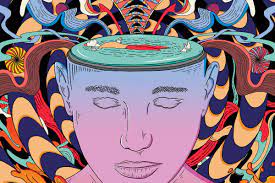
'AAZ-A-154' is an overlooked molecule that could provide mental health therapy
It stimulates receptors for serotonin, which mediates satisfaction and happiness
In trials on mice it produced rapid and 'long-lasting antidepressant-like effects'
A newly-identified 'psychedelic-like drug' doesn't cause hallucinogenic side effects, scientists reveal.
AAZ-A-154 is a 'previously unstudied' molecule that has the potential to act on beneficial pathways in the brain without causing hallucinations.
It stimulates receptors for serotonin – a key hormone sent between nerve cells in our brain that stabilises our mood, well-being and happiness.
In experiments on mice, AAZ-A-154 produced rapid and long-lasting antidepressant-like effects after a single dose, the US researchers found – and, if synthesised, could be an effective treatment for humans.
Psychedelic drugs have already shown promise for treating neuropsychiatric disorders such as depression and post-traumatic stress disorder (PTSD).
Researchers are now trying to identify alternative medications that offer the benefits of psychedelics without causing often distressing hallucinations.